Art Hostage Services
-
The Art Hostage team undertakes a wide range of services, including due diligence, collection conservation and management, risk assessment and security as well as legal issues, recovery and dispute resolution involving art and artifacts. Through partnerships with leading organizations, the Art Hostage team can provide a complete service for all aspects of collecting and protecting art.
Art Hostage Comments:
Arthur Brand, claims in the article on Bloomberg, below he is negociating with former IRA members to recover the Gardner art.
These leads are Irish drug dealers who work out of the Netherland.
Furthermore, Arthur Brand claims a Dutch criminal had photo's of the Gardner art back in the 1990's and was trying to sell them in Europe. This criminal was Michel Van Rijn and he sold them to Irish criminals, but sadly they were copies/fakes and Michel Van Rijn scammed the buyers, who could not get them authenticated for obvious reasons.
These fake Gardner artworks have been passed through many hands over the years and if they are ever recovered it will become clear very quickly they are good quality fakes. Therefore no reward would ever be paid out and the reason given will be because they are copies, true or false.
However, this is not to say some of the original Gardner artworks might be held by Irish people, but this latest attempt by Arthur Brand is chasing the fake Gardner art sold by Michel Van Rijn.
Cracking the Biggest Art Heist in History
For
nearly three decades, detectives have sought to solve the theft of $500
million of artwork from the Isabella Stewart Gardner Museum in Boston.
They think the end is near.
By
Nina Siegal
It’s still regarded as the greatest unsolved art heist of all time: $500 million of art—including works by Rembrandt, Vermeer, Degas, and Manet—plucked from the Isabella Stewart Gardner Museum in Boston on March 18, 1990, by two men posing as police.
The
museum had offered a $5 million reward for the return of all 13 pieces
in good condition. Last month, the bounty was suddenly and unexpectedly doubled to $10 million.
For such a long-unsolved case, the investigation is surprisingly active into the disappearance of the artworks, which include paintings, a Chinese vase and a 19th century finial of an eagle.
Anthony Amore, the museum’s director of security, says he works on the
case every day and is in “almost constant contact” with FBI
investigators. Tipsters still call all the time, with leads that range
from the vaguely interesting to the downright bizarre. Among them:
a psychic who offered to contact the late Mrs. Gardner’s spirit, and a
few self-styled sleuths who reckon the paintings can be found with metal
dowsing rods.
Most of those go nowhere. Whether the works will ever be
recovered, or if they still exist at all, is one of the great questions
that has divided the art world.
“Those paintings are gone,”
said Erin Thompson, professor of art crime at the John Jay College of
Criminal Justice in New York. “Either because they were destroyed
immediately after they were stolen, or because they’ve already been
beaten up so badly by being moved around in the back of cars.”
But
there is one outside detective respected by Amore—Arthur Brand, a Dutch
private investigator—who believes not only are the artworks still
intact, but also that he can bring them home. This year.
“It’s
almost certain that the pieces still exist,” Brand told me. “We are
following two leads that both go to the Netherlands, and we are now
negotiating with certain people.”
Brand, 47, has
become one of the world’s leading experts in international art crimes. A
British newspaper once called him the “Indiana Jones of the art world”
for his combination of crack negotiating skills and uncanny instincts
for finding stolen art.
In the past few years, Brand has posed as the agent of a Texas oil millionaire to help Berlin police find two enormous bronze horses from the German Reichstag. He worked with Ukrainian militia members to secure the return of five stolen Dutch masters to the Westfries Museum in the Netherlands. He negotiated with two criminal gangs for the successful return of a Salvador Dali and a painting by Tamara de Lempicka, together valued at about $25 million, to the now-closed Scheringa Museum of Realist Art, also in the Netherlands.
Brand
acts as something of a liaison between criminals and the police.
Controversially, he’ll try to make deals that allow the culprits to go
free, because he says his primary goal is saving the art from the trash
heap.
“There are very few like him who understand the reality of this sort of crime,” Amore said.
René
Allonge, the chief art investigator with the Berlin State Office of
Criminal Investigation, said his team had been searching for Hitler’s
bronze horses since 2013. He contacted Brand at the end of 2014, met him
in 2015, and they conducted the investigation and searches jointly, “as
far as it was legally possible.” Ultimately, Brand played a
crucial role in the discovery of the bronze horses, as well as other
populist bronzes from the Nazi era, he said. “He succeeded in
penetrating a very closed scene of collectors of high-quality Nazi
devotionalia, where we finally found the sculptures that we were
searching for,” Allonge wrote in an email.
Brand’s
reward in some of these high-profile cases is often the glory and
nothing more. Scheringa had originally offered a €250,000
bounty ($280,000) for the Dali and Lempicka, but the museum had shut
down by the time they were recovered. Brand was paid an hourly fee and had his expenses reimbursed, though he declined to say by whom. For finding Hitler’s horses, he got no cash at all, just a lot of free publicity, he says.
“He’s
not the guy to charge you for every hour he works,” said Ad Geerdink,
director of the Westfries Museum, for which Brand recovered five
old-master paintings from a militia group in Ukraine. “He knew that we
are a small organization with not many resources, so the fee was very,
very friendly.”
The biggest bonus Brand’s ever
received for solving a case was about €25,000, he says. He adds
that he’s investigating the Gardner case for the glory. “It’s the Holy
Grail in the art world,” he said.
It’s estimated that only 5 percent to 10
percent of stolen art is ever recovered, largely because the works
are impossible to sell publicly.
“People will steal
art first and then think about what to do with it second,” said
Thompson, the art crime professor. “Often they’ll destroy the work of
art to get rid of the evidence.”
Shortly after seven
paintings by Picasso, Monet, Van Gogh, Gauguin, and others, valued in
the tens of millions of dollars, were stolen from Rotterdam’s
Kunsthal museum in 2013, they were burned by the mother of one of three
Romanian thieves arrested and charged in the burglary. She confessed to
investigators that she was scared after police began searching her
village.
Alternatively, paintings are used as bargaining chips in
criminal cases. That’s how Italian police recently located two stolen
Van Goghs.
In 2002, thieves broke into the Van Gogh
Museum in Amsterdam with a sledgehammer—just because they saw a weakness
in the museum’s security, not because they knew what they were after.
The opportunists sold the works for €350,000 to alleged Italian mobster
Raffaele Imperiale. (The art was said to be worth tens of
millions—although it never came to market, so it’s impossible to know.)
In a seaside town near Naples, Imperiale stored the canvases in his mother’s kitchen cabinet
for a dozen years until prosecutors closed in. In August, Imperiale
disclosed their location in an attempt to improve his standing with the
courts, his lawyers, Maurizio Frizzi and Giovanni Ricco, told me.
Prosecutors subsequently reduced his sentence by about two years, they
said.
But often, the thieves are only persuaded to let go of works if
they think they’re going to sell them on the black market. This is where
someone like Brand can come in. In 2014, he created a character
to help solve the case of the missing Reichstag bronze horses. He
pretended to be an agent for “Dr. Moss,” a fictional American collector
who had gotten rich in the oil business, loosely based on the character
J.R. Ewing from the TV show Dallas. He has also posed as the
representative of princes and sheikhs, or even as a criminal himself.
“Whatever works, works,” he said. He draws the line at wearing costumes.
Brand says he almost never deals with the original
thieves. Stolen art tends to move through many hands. Sometimes, the
ultimate recipient doesn’t know that what they have was stolen.
“In
many cases, I have to deal with a person who has a problem: They’ve
been screwed by another criminal group,” Brand said. “They can either
pass art along to another criminal group, or they can burn it. That’s
even worse. What they won’t do is take the work to the police and say,
‘We found these Van Goghs.’ Because the police will ask where they got
them.”
That’s
where Brand has an opportunity to become the middleman. He can promise
the sellers they won’t get in trouble, then get assurances that the
police won’t make arrests.
Brand’s style works
particularly well for snaring amateur crooks, said Noah Charney, founder
of the Association for Research Into Crimes Against Art. A lot of
people who steal art assume there are collectors out there who buy on
the black market, like characters in heist movies. In fact, almost none
exist, he said.
“People have always collected art to
show their erudition and to advertise their wealth,” he said. “If you
buy something that you know or suspect was stolen, you can’t show it to
anyone.”
Criminals don’t always know that. “They get
desperate and then turn to someone like Arthur Brand,” someone they are
willing to believe is the real deal, Charney said.
Six-foot-two,
with a shock of blond hair and bright blue eyes, Brand could be played
in the movie of his life by Liam Neeson or Ralph Fiennes. His sleuthing
is an adjunct to his primary and less dramatic job—helping buyers who
have been swindled, conned, or overcharged for art.
“About
70 percent of what I do is just in the office, visiting clients,
visiting dealers, talking to people, and saying, ‘Give him his money
back!’” he said. “The other 30 percent is walking around talking to
criminals, talking to police, informants, and going undercover
sometimes.”
Brand first became connected to the art world as a student,
through collecting ancient Roman and Greek coins. “I found out that
there were a lot of fakes out there, and I didn’t want to spend my
hard-earned money buying fakes,” he said.
In 2002,
Brand received the first of many tips, rumors, and leads about the
Gardner case. He heard that back in 1991, people in Holland had
photographs of the paintings in storage. By following up, he became
convinced that the paintings were never sent to the Netherlands, but
photographs were being circulated by people trying to sell the paintings
to someone there.
Sometime around 2010, he heard
that the works had ended up in the hands of former members of the Irish
Republican Army. But he soon suffered a setback with the death of one of
his top sources, a former IRA member.
Brand believes
the original thieves were small-time burglars who sold the pieces to a
criminal gang in the U.S. before they were killed in the early 1990s. At
some point in the mid-1990s, he thinks, the works were shipped to
Ireland by boat and ended up with top-ranking IRA commanders.
For
the past 12 years, Amore and the FBI have worked around a theory that
local gang members in the Boston area may have been involved. They are
fairly certain that the two thieves who committed the crime died shortly
afterwards, Amore said.
But Amore believes the works
are still in the U.S. “Art that is stolen in America tends to stay in
America,” he said. “I’d be happy to be proven wrong.”
The statute of limitations on the theft ran out in 1995, and
the Office of the U.S. Attorney for Massachusetts has considered
offering immunity for information that leads to its return. The museum
mostly cares about getting the works back, Amore said. That’s partly why
they raised the reward.
“It was important for the museum to show its commitment,” he said. “We’re telling the public this is how serious we are.”
Brand
says the higher reward may help speed things up. He isn’t convinced,
though, that the criminals involved will trust the FBI to live up to the
deal, despite his assurances.
“For me, it’s not
about getting people arrested,” he said. “We’re not talking about
murders here. If a big criminal has them or the Pope, it doesn’t matter.
The important thing is to get them back.”
Brand says this case could be cracked within months. He won’t elaborate, but if his leads are good, he’ll have to work fast.
Amore
also says that he and the FBI may be close to solving the case, and
they have leads that are “making the haystack smaller.” He, too,
declined to share specifics. “We feel we’re on the right path,” he said.
The FBI is more measured. “The investigation has
had many twists and turns, promising leads and dead ends,” said Kristen
Setera, an agency spokeswoman in Boston. “It has included thousands of
interviews and incalculable hours of effort. The FBI believes with high
confidence that we have identified those responsible for the theft, even
though we still don’t know where the art is currently located.”
Brand is confident he can find out.
“Somebody
I’m talking to knows something,” he said. “These people are not idiots.
They know that they can’t just hand them over and walk away with
impunity. They think even if they’ve been offered immunity, the police
will have some tricks up their sleeves. What I can do is I can provide
them a way to return the works without ever having contact with the
police. I can even promise them that they can get the reward.”
Would Brand really hand over $10 million?
“If I can be the one who can bring them to the museum,” he says, “give me a good glass of Guinness, and that’s reward enough.” —With assistance from Hugo Miller.
Boston police found Richard Abath handcuffed and duct-taped in the basement of the Gardner Museum after it was robbed in 1990.
Evidence in Gardner Museum thefts that might bear DNA is missing
David L. Ryan/Globe Staff
Despite an exhaustive internal
search, the FBI has been unable to find the missing evidence in the
Isabella Stewart Gardner Museum art heist.
By Shelley Murphy and Stephen Kurkjian
Globe Staff and Globe Correspondent
The trail had been cold for years when the FBI announced in
2010 that it had sent crime scene evidence from the Isabella Stewart
Gardner Museum to its lab for retesting, hoping advances in DNA analysis
would identify the thieves who stole $500 million worth of
masterpieces.
But behind the scenes, federal investigators
searching for a break in the world’s largest art theft were stymied by
another mystery. The duct tape and handcuffs that the thieves had used
to restrain the museum’s two security guards — evidence that might, even
27 years after the crime, retain traces of DNA — had disappeared.
The FBI, which collected the crime scene evidence after the heist,
lost the duct tape and handcuffs, according to three people familiar
with the investigation. Despite an exhaustive internal search, the FBI
has been unable to find the missing evidence, thwarting its plan to
analyze it for potential traces of the thieves’ genetic material,
according to those people, who asked not to be identified because they
are not authorized to speak publicly about the case.
It’s unclear
when the items vanished — although two people said they have been
missing for more than a decade — and whether they were thrown away or
simply misfiled, the people said.
The lost evidence marks another setback in an ongoing investigation
that has been plagued by the deaths of suspects, defiant mobsters,
fruitless searches, and a litany of dashed hopes. None of the 13 stolen
treasures, which include masterpieces by Vermeer and Rembrandt, have
been recovered, and no one has been charged.
The FBI declined to comment on the missing evidence, citing the
ongoing investigation, but defended its handling of the case. Harold H.
Shaw, the special agent in charge of the FBI’s Boston office, said the
bureau has devoted significant resources to the investigation, chased
leads around the world, and remains committed to recovering the artwork.
“The
investigation has had many twists and turns, promising leads and dead
ends,” Shaw said. “It has included thousands of interviews and
incalculable hours of effort.”
The FBI completed DNA analysis of some museum evidence in 2010,
according to Kristen Setera, an FBI spokeswoman. She declined to say
what items were tested or what, if anything, the tests showed.
The
heist remains one of Boston’s greatest mysteries. Promising leads have
led nowhere, leaving investigators at a crossroads. Most notably, a
seven-year effort to pressure a Connecticut mobster for information has
come up empty.
Robert Gentile, 80, faces sentencing in August on
gun charges but could walk free if he cooperated with federal
authorities, his lawyer said. Despite the enticement, and a hefty
reward, Gentile denies knowing anything about the stolen artwork.
Finding
the treasures may require a new approach, according to several former
law enforcement officials who worked on the case. They suggested that
investigators should restart the investigation from scratch and review
the evidence in a contemporary light.
Carmen Ortiz, who recently stepped down as US attorney for
Massachusetts, said authorities should shift their strategy, perhaps to
include appeals on social media, and expand the investigative team.
“Get
around the table with some fresh eyes, in addition to those who know
this case very well, to give it a new look,” Ortiz said. Ortiz’s
successor, Acting US Attorney William Weinreb, said the investigation
remains a top priority.
A former assistant US attorney, Robert
Fisher, who oversaw the Gardner investigation from 2010 to 2016, said
investigators should “go back to square one” and study the crime as if
it just happened, analyzing each piece of evidence with the latest DNA,
fingerprint, and video technology.
“What if it happened last
night, what would we do this morning to try to crack this case?” said
Fisher, an attorney at Nixon Peabody.
Told that the Globe had
learned the duct tape and handcuffs left behind by the thieves were now
missing, Fisher said he hoped they would be found.
“Frankly, it
could be enormously helpful,” Fisher said of the missing items. “I think
present-day forensic analysis of evidence like that could lead to a
break in the case.”
However, he said the tape may yield no viable DNA, depending on its condition.
Anthony
Amore, the museum’s security director, said investigators are pursuing a
number of new leads following last month’s announcement that the reward
for information leading to the recovery of the artwork had doubled to
$10 million until year’s end. Dozens of tips were received, he said.
“I
operate in the realm of hope,” said Amore, who has worked with the FBI
and US attorney’s office on the investigation for nearly 12 years. “We
are never going to stop looking for these paintings.”
The brazen heist — the largest property crime in US history — occurred in the early morning hours of March 18, 1990. Two
thieves disguised as police officers claimed to be investigating a
disturbance when they showed up at the museum’s side door on Palace Road
in Boston’s Fenway neighborhood. They were buzzed inside by a
23-year-old security guard, who, by his own admission, has never been
eliminated as a suspect.
The thieves wrapped duct tape around the
hands, eyes, and mouths of the two guards on duty, then left them
handcuffed in the museum’s basement as they spent 81 minutes slashing
and pulling masterpieces from their frames.
In the days after the
robbery, FBI and Boston police crime scene analysts scoured the museum
for clues. They lifted partial fingerprints from the empty frames but
found no matches in the FBI database.
At the time, DNA evidence was in its infancy. But scientific advances
have since opened new doors for investigators, cracking unsolved cases
across the country.
DNA experts said it’s possible the thieves’ DNA couldbe
pulled from the duct tape, although the chances are slim. Success
hinges on a number of variables, such as how the evidence was preserved
and how many people handled it while freeing the guards and storing it.
“Certainly
people have retrieved DNA from samples that old, but how much you can
get is the big question,” said Robin Cotton, director of the Biomedical
Forensic Sciences Program at the Boston University School of Medicine.
Analysts
would also need DNA samples from the police officers who removed the
tape to distinguish their DNA from the thieves, Cotton said.
Tom
Evans, scientific director of the DNA Enzymes Division at New England
Biolabs, an Ipswich firm that conducts DNA testing, said technology has
come so far that it may take only a single cell to identify someone
through DNA analysis. But DNA breaks down over time, especially in hot
or humid conditions.
“Twenty-seven years later, it might work and it might fail,” Evans said.
The
statute of limitations on the theft expired years ago, but authorities
could still bring criminal charges for hiding or transporting the stolen
artwork. The US attorney’s office has offered immunity in exchange for
the return of the paintings.
Four years ago, the FBI announced it
was confident it had identified the thieves — local criminals who have
since died — and had determined that the stolen artwork traveled through
organized crime circles from Boston to Connecticut to Philadelphia,
where the trail went cold around 2003.
In 2010, the FBI began
focusing on Gentile after the widow of another person of interest in the
theft, Robert Guarente, told agents that her late husband had given two
of the stolen paintings to Gentile before he died in 2004.
Federal
authorities allege that Gentile offered to sell some of the stolen
paintings to an undercover FBI agent in 2015 for $500,000 apiece. They
remain convinced that he is holding back what he knows.
However,
Gentile’s lawyer, A. Ryan McGuigan, said his client insists he has
nothing to offer investigators and recently told him, “They could make
the reward $100 million and it wouldn’t change anything because there
ain’t no paintings.”
Another person who has come under renewed
scrutiny in recent years is Richard Abath, the guard who opened the door
for the thieves. A Berklee College of Music dropout who played in a
rock ’n’ roll band while working at the museum, he has steadfastly
maintained that he played no role in the heist.
Authorities have
said that motion sensors that recorded the thieves’ steps as they moved
through the museum indicate they never entered the first-floor gallery
where Manet’s “Chez Tortoni” was stolen. Only Abath’s steps, as he made
his rounds before the thieves arrived, were picked up there, they have
said.
Steve Keller, a security consultant hired by the museum,
said he tested the motion sensors after the theft and determined they
were reliable. He said he entered and left the room several times where
the Manet had been stolen, even crawling on his hands and knees in an
effort to avoid detection. Each time the sensors detected his presence.
Abath declined to comment.
Former
US attorney Brian T. Kelly, who previously oversaw efforts to recover
the Gardner artwork, said he remains hopeful the masterpieces will be
recovered.
“All it takes is a new lead that leads in a new direction and a lucky break or two,” Kelly said. Shelley Murphy can be reached at shelley.murphy@globe.com. Follow her on Twitter @shelleymurph. Stephen Kurkjian can be reached at stephenkurkjian@gmail.com Art Hostage Comments:
So many false leads, controlled oposition etc.
The FBI insist any Gardner art recovery is done on their terms and includes arrests/indictments etc.
The Gardner Museum has also been bullied into towing the line therefore
any reward includes conditions that allows refusal of reward payment,
for example the insistance on all the art work being recovered in "Good
condition" before any reward would be paid out.
The museum’s trustees also felt they were being kept in the dark about
the status of the investigation. Trustee Francis W. Hatch, Jr. recalled
one meeting held ostensibly to gain a briefing from the agent and
supervisor on the case. “They wouldn’t tell us anything about what they
thought of the robbery
or who they considered suspects,” Hatch recalls. “It was
very embarrassing to all of us.”
"Hatch
convinced the trustees that the museum needed to hire a fi rm to
investigate, and stay in touch with the FBI on its probe. IGI, a private
investigative firm based in Washington begun by Terry Lenzner, who had
cut his teeth as a lawyer for the Senate Watergate Committee, was put on
retainer, and the executive assigned to the case was Larry Potts, a
former top
deputy in the FBI. Fearful that their authority was being undercut, the FBI’s
supervisors
in Boston complained to US attorney Wayne Budd, who fired off a memo
warning the museum that it faced prosecution if it withheld information
relevant to the investigation. Hatch responded, saying in his letter
that he
was “shocked and saddened” by Budd’s attempt to “intimidate”
the museum and that it cast “a pall over future cooperative efforts.”
From Master Thieves by Stephen Kurkjian
Wow! It's almost as if one of the thieves was untouchable,
like because he was the star witness testifying in a German court in absentia
against the ringleader of the longest running spy ring in American history,
Clyde Lee Conrad, and was also implicating himself and two other spies he
himself had recruited, at that time, like Boston area native Rod Ramsay, or
somebody like that.
Ramsay's college roommate at Charles River Park in Boston
1980-1981 was Darryl Nitke. Nitke had been roommates at Eton College with
Muhammad Khashoggi, they remained friends and Nitke's brother in law and
business associate Bedros Bedrossian was formerly business partners with with
Muhammad's sister, Nabila Khashoggi in the mid-80's. http://articles.sun-sentinel.com/1985-06-10/business/8501230280_1_computer-foreign-visitors-smith-gallery
Nitke was a guest on the Khashoggi yacht for a cruise in 1982.
The Gardner Museum doubled the reward right before Khahsoggi died after a long
illness on June 6, 2017. #LOCALTOUGHS
Interesting that the announcement for doubling the reward to ten million
came out 5/23/17 as Adnan Khahsoggi was dying of Parkinsons Disease. He
died 6/6/17.
He had a very elaborate network set up for stolen fine art transit.
"In
addition, more than thirty paintings, valued at $200 million, that
Imelda Marcos had allegedly purloined from the Metropolitan Museum of
Manila, including works by Rubens, El Greco, Picasso, and Degas, were
being stored by Khashoggi for the Marcoses, but it turned out that the
pictures had been sold to Khashoggi as part of a cover-up. The art
treasures were first hidden on his yacht and then moved to his penthouse
in Cannes. The penthouse was raided by the French police in a search
for the pictures in April 1987, but it is believed that Khashoggi had
been tipped off. He turned over nine of the paintings to the police,
claiming to have sold the others to a Panamanian company, but
investigators believe that he sold the pictures back to himself. The
rest of the loot is thought to be in Athens. If he is found guilty, such
charges could get him up to ten years in an American slammer."
Some of the Gardner art may have reached the Middle East, making it much harder to recover.
Some of the Gardner art may be in terrible condition preventing any
recovery because any reward would be negated by this, see Gardner
museums conditions of recovery in "Good condition"
The Gardner case has been a political tug of war, with all sides refusing to give an inch. Food for thought:
If they believe the thieves are deceased why did they only just recently
stipulate that the thieves are not eligible for the reward?
From this article: "Plagued by the deaths of suspects,
defiant mobsters."
Beat that local toughs theory into the ground Boston Globe. Last month the FBI
said the know who the guy in the video is, but they're not saying if he was
there for a legitimate reason or not. So obviously he wsa there for an
illegitimate reason. And he most certainly is not a local tough so the whole
local tough or any kind of mafia type theory is thoroughly discredited.
Abath has no known associations with local toughs and this guy talking to ABath
is not a local tough or any kind of mafia type. Kurkjian reported in November
of 2015 that four security guards said it was retired Lt. Colonel and Gardner
Security supervisor Larry O'Brian, which is ridiculous, but it points to the fact
that by his haircut, clothing, and comportment, this was a guy who could be
mistaken for a security supervisor. Could Donati, or DiMuzio, or Reissfelder,
be mistaken for a security supervisor by security guards on a surveillance
video? I don't think so.
There has never been a scintilla of evidence supporting that theory. The whole
theory was just a full employment for program FBI agents and their friends in
journalism. And the dead suspects were just convenient props who would not be
able to stand up for themselves, be publicly vetted or file a lawsuit.
From the New York Times in March of 2015 by Tom Mashberg:
Notice that Mashberg doesn't say they look like the police sketches. Nor does
Kelly get quoted saying that. How absurd? It's like trying to translate the
Soviet house organ Pravda into Russian.
In the Globe's article about the Powerpoint 3/17/15, a couple of weeks later,
Shelley Murphy, evidently couldn't bring herself to mention Leonard DiMuzio by
name. Can you blame her? DiMuzio, the victim of an unsolved homicide, was an
honorably discharged Marine Corp corporal, and a Viet Nam vet. He does NOT
resemble the police sketch. The New York Times described him as a
"skillful burglar" which probably means they had not caught him yet.
Reissfelder, a bad check writer, who liked to talk like a tough guy spent 16
years in prison for a robbery/murder he did not commit and was exonerated.
After he got out in 1982, he slept with the lights on.
But get ready for the real "CATCH" from this article by Murphy about
Reissfelder
"The catch: Reissfelder was 50 at the time of the heist, and the guards
estimated one thief was in his late 20s to early 30s and the other was in his
30s. However, Kelly said he doesn’t believe the age estimates were
reliable."
So Kelly says he thinks that two guys in their twenties one a 27 year old with
a Master's Degree from the New England Conservatory can't differentiate between
someone in their 30's and a 51 year old drug addict who had spent half of his
adult life in Walpole State Prison.
And Robert Gentile is the only "defiant" mobster. He says he didn't
do it. Stephen Kurkjian says he wasn't involved. Kurkjian's name is on this
article. How is Gentile's defiance any kind of "plague?"
The I.T. Revolution did not end yesterday morning and it is not ending tomorrow
morning. Get real. The paintings may or may not come back but the truth about
who did it is coming out. It was not local toughs.
The Boston FBI conducted the "investigation" the
way they were told from higher up, in Washington from the beginning. It's time
for Washington to leave Boston alone on this now.
“The place is so wonderful now that we tend to forget what a horrendous thing
it was to have happened,” [back then Governor Michael] Dukakis recalled
recently. “The wearing of police uniforms always bothered me, and then the
SEEMING difficulty of being able to identify them.”
Hawley too, he said, has shared with him and his wife, Kitty, a very close
friend, her frustration that the FBI has been unable to recover any of the
stolen pieces. “She’s frustrated, HIGHLY SKEPTICAL about a lot of the stuff,”
he said. “She’s gotten tired with everything. Enough already.” from Master
Thieves by Stepehn Kurkjian
Dear Washington: Enough already!!!
This was not made public until 2013:
"We also were threatened by criminals who WANTED attention from the FBI
Nobody knew really what kind of a cauldron we were in." Anne Hawley
12/4/13 https://youtu.be/WwnQs1BvvlU?t=44
What kind of criminals WANT attention from the FBI?
I don't know what kind of cauldron we're in, but from the smell of it, I think
I know what it is we're sharing it with.
Who cares? I mean it is bad, but they already know who did
it. This seems like a diversionary, gaslighting, in-emergency-break-glass,
non-story designed to regain control of the narrative by pumping up pointless
data with media steroids and pumping it out into the information stream on
this.
CNN was somehow compelled or persuaded to re-write an article about the Gardner
Heist reward being doubled to ten million written by Charney. They didn't
acknowledge any errors, but they did put in this disclaimer:
You can see Charney on American Greed Season Two Episode Nine "Unsolved:
$300 Million Art Heist / Preying On Faith" on Hulu matter of factly
contradicting the FBI's Geoff Kelly who appears on the same episode to discuss
the Gardner Heist https://www.hulu.com/watch/46551#i0,p5,d0
Then on Friday Emily Rooney smeared Charney at the end of the show, describing
this established art theft expert incompletely as an art novelist, and one who
is indifferent to facts, and whose original story had "ten egregious
errors." But Rooney has not said what any of the errors were and CNN is
not doing a correction. So all we have for egregious errors in the public
domain is Rooney's description of Noah Charney's professional background,
character and ability to render facts on paper for a news story. https://youtu.be/jmfXv-MT8nM?t=344
And the Gardner Heist story is one place where this rivalry is playing itself
out. It is a prelude to what appears to be just how things are going to be for
a while and getting rid of Trump is not going to solve it.
Charney's story (the current version) suggests that raising the reward is an
act of desperation. One thing we know is that the suggestion of a Boston Globe
editorial from the time of 25th anniversary is unlikely to be considered no
matter how hopeless things get in this 27 year old saga:
Cambridge Fitzwilliam stolen jade 'lost for generations', expert says
Efforts to trace £57m-worth of
Chinese artefacts stolen from a Cambridge University museum five years
ago have proved fruitless, police said.
Thieves broke into the Fitzwilliam Museum on 13 April 2012 and escaped with 18 mainly jade items but since then there has been no trace of them.
Despite the passage of time, the museum remains hopeful of their return.
But an art expert believes the objects have been sold into China and could take generations to resurface.
A number of people were jailed for their roles in the Fitzwilliam robbery and other raids on museums and an auction house across the UK.
While
items including a rhino head and Chinese artefacts were retrieved and
returned, none of those from the Cambridge museum was ever found.
"Artwork is either recovered very quickly, or the thieves realise
what they've got is radioactive, and it goes underground for a
generation or more," Christopher Marinello, founder of Art Recovery
International, said.
With the Fitzwilliam artefacts registered on a
number of art databases including Interpol and Artive, any dealer
exercising due diligence would realise the items are stolen "and that's
how they might be located", he said.
Because the theft was so
widely publicised, Mr Marinello believes the Fitzwilliam jade has "gone
underground", most likely traded among criminals, perhaps for drugs or
weapons.
While Cambridgeshire Police have confirmed the case
is still open, the force is not looking for anyone else in connection
with the theft.
The Fitzwilliam remains hopeful its jade will be found and returned, a spokeswoman said.
However,
lawyer Mr Marinello, who specialises in recovering stolen artwork for
museums, churches, insurance companies and private clients, thinks the
museum could be waiting some time.
"I believe the Fitzwilliam jade has made its way to the top market for it in the world - and that's China," he said.
"I
think they're in Chinese collections and until someone perhaps dies and
the next generation decides to sell, I don't think we'll see them for
quite a while."
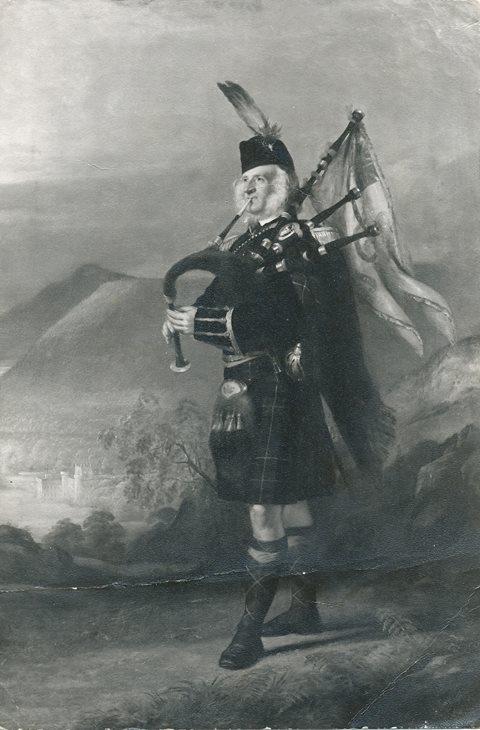
£10,000 painting by J M Barclay stolen from home near East Linton
The Piper to the 2nd Marquess of Breadalbane, which has been stolen
A PAINTING valued at about £10,000 has been stolen from an East Lothian home.
Police are appealing for witnesses following a housebreaking at an
address near Kippielaw Farm, off Braeheads Loan, near East Linton.
The incident occurred between 5pm on Saturday, April 15, and 2.45pm on Monday, April 24.
Entry was forced to the property and several paintings, including a high-value oil painting, were taken.
The work, entitled 'The Piper to the 2nd Marquess of Breadalbane', by J
M Barclay, dates from 1842 and is a 33” x 22” oil on canvas, valued in
the region of £10,000.
Four of the other paintings taken were a black and gold Asian style design.
Local police are continuing with their enquiries and are asking anyone with information that may assist to come forward.
Community Inspector Andrew Hill from Haddington Police Station said:
"Based upon the specific nature of the property taken it is likely that
this is a targeted theft. A vehicle would have been involved.
"The paintings stolen are all originals and very distinctive.
"Crimes such as this are fortunately rare; however, apart from the
financial loss to the owner, they also involve a loss of history and
heritage.
The Edmonton man who inspired 'Yoga Hoser' arrested for possession of a $1.2-million ancient statue
For a while, it felt like destiny, a
string of events so unlikely it could only have been fated. But Simon
Metke doesn’t think that way any more.
Instead,
for Mr. Metke, it now seems more like a cosmic joke that brought the
Edmonton man and an ancient soldier together, thrusting him into a world
of Canadian art theft, criminal justice, drug charges, flamboyantly bad
Hollywood filmmaking, an army of deadly Canadian Nazi sausages and the
creation of the term “yoga hoser.”
“Even though it was such a stressful
thing, I still appreciate the beauty of the absurdity of it,” Mr. Metke
says. “It’s so easy to try and make it meaningful because of how intense
it all is, but it’s so abstract at the same time. People are just like,
‘Yeah, your life is crazy.’”
The
story began in 2011, when a friend in Montreal told Mr. Metke about a
man who was selling a stone sculpture of a soldier, claiming it was some
kind of antiquity. Mr. Metke, who was deeply interested in ancient
cultures and heading to Montreal for a visit, seemed a likely buyer.
But
when Mr. Metke saw the piece in his friend’s apartment, he was
skeptical. It looked to him more like a high-end replica, like a mantle
decoration that could be bought at a home store in a suburban strip
mall. Still, he appreciated the workmanship and, though the price was
high – $1,400 – his friend stood to make a commission on the sale.
Appearing
as it did just ahead of the year 2012 (the final year of the Mayan
calendar) and in the midst of Mr. Metke’s own intense spiritual journey,
well, he thought it was meant to be.
He
googled, “Is there a Mesopotamian artifact missing?” but found nothing.
So he bought the sculpture, packed it with his clothes and – after his
suitcase was briefly lost by an airline – unwittingly brought a
2,500-year-old Persian artifact back to his condo in Edmonton.
At
first, Mr. Metke kept it in a meditation area in his living room. But
he eventually moved it onto a bedroom bookshelf, where the bas-relief
sculpture that once lined the hall in Persepolis sat among an array of Star Wars
figurines, stuffed animals and crystals, no more meaningful or special
than his other mementos and icons. He thought about taking it on Antiques Roadshow to see if it was worth anything, but never did.
Unbeknownst
to Mr. Metke, the sculpture had been stolen from the Montreal Museum of
Fine Arts a couple of months before he bought it, although the theft
was not initially made public. It was valued at $1.2-million, and there
was a hefty reward available for its return.
On Jan. 22, 2014, police officers working with the RCMP’s Integrated Art Crime Investigation Team showed up at his door.
“The
sun’s coming in through the window, the bougainvillea flowers are
glowing, the crystals are making rainbows,” he says, mimicking what he
said when interviewed following his arrest for the theft of the
sculpture and some drug-related charges.
Mr.
Metke’s case – and that colourful quote – caught the attention of Kevin
Smith, the American film director behind movies such as Clerks, Mallrats and Dogma,
who joked about the story on his podcast. When co-host Scott Mosier
mimicked an RCMP officer at the door of Mr. Metke’s apartment saying,
“Open up, yoga hoser,” the term took hold.
On
April 20 that year – 420, the day that potheads annually celebrate the
cannabis culture – Mr. Smith announced he was working on a script for a
movie called Yoga Hosers. The plot was not actually Mr. Metke’s
story – it’s about two teenaged girls from Winnipeg who save the
country from Canadian Nazi sausages – but the film included a flaky yoga
teacher character named Yogi Bayer, clearly styled to resemble Mr.
Metke.
The movie premiered at the
Sundance Film Festival in January, 2016, with a cast that included
Johnny Depp and Natasha Lyonne. Justin Long, who played Yogi Bayer,
tried to contact Mr. Metke before it shot to help develop the character.
“He eventually called me, months after I shot my scenes,” Mr. Long said, speaking on the carpet at Sundance.
The
movie was broadly panned, with one review describing it as “close to
unwatchable” and “a corny Canuck joke, told for 88 surreally unfunny
minutes.”
The situation has, at times, felt surreal and unfunny for Mr. Metke, too.
But
after more than three years, the case was finally resolved in an
Edmonton courtroom this week. Mr. Metke pleaded guilty to one count of
possession of stolen property. Two drug-related charges were stayed.
An
agreed statement of facts acknowledged Mr. Metke didn’t know the
artifact was stolen but that he “could have gone further” to determine
where it came from. The case was described variously by the Crown and
defence as “very unique,” “very, very unique” and “extraordinary.”
The
judge granted Mr. Metke a conditional discharge with a period of
probation and community service. Dozens of friends who showed up in
court for Mr. Metke broke out in cheers, and some wiped away tears. Mr.
Metke hugged the prosecutor.
With the
threat of jail and the possibility of a criminal record behind him, Mr.
Metke says he plans to get back into projects he had been working on,
including shooting documentary footage of ancient landscapes and further
developing a vertical garden system he created. He’s refining a theory
about life he calls “The Entropy of Irony,” and is trying to find
positive things in his strange experience.
He says he started to watch Yoga Hosers once, and may try again one day.
The
ancient soldier, meanwhile, is back at the Montreal Museum of Fine
Arts. Court heard it returned from its journey in “pristine condition,”
carried back by an archeology professor who travelled to Edmonton to
retrieve it.
There’s an orange stuffed octopus on the shelf where the artifact used to be. Mr. Metke knows exactly where it came from.
Lindauer paintings stolen in Auckland art heist 'radioactive'
Lindauer paintings stolen in Auckland art heist 'radioactive'
A leading expert in recovering stolen and missing art said media
coverage of the recent smash and grab style theft of two high-profile
paintings had left them worthless to thieves.
Chris Marinello
from Art Recovery International in Italy said the two Gottfried Lindauer
paintings snatched from International Art Centre in Parnell, Auckland,
were now "radioactive" and no one would buy them.
Marinello, an
expert who had seen more than $500 million of art recovered, said last
weekend's ram-raid theft of the two paintings was amateur and
opportunistic.
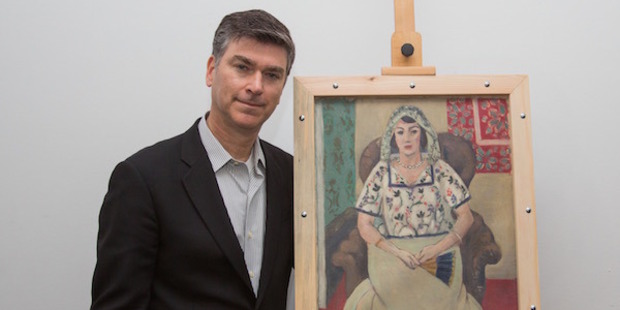
Art recovery expert Christopher
Marinello has negotiated the recovery of more than $500m of stolen art -
including this Matisse. Photo / supplied "This was not an elegant robbery. It was totally
unsophisticated by people who thought they would be able to sell the
paintings quickly," he said.
"The level of interest and the publicity in the theft means these
paintings are now radioactive - no one in their right mind will touch
them."
Marinello is based at Art Recovery International's office in Venice but the company also works out of the UK and United States.
He
has helped recover more than $500m of stolen and looted artwork and
helped in the recovery of art taken by Nazis in World War II.
Just
last year Marinello negotiated the return of a priceless 16th-century
carving stolen decades earlier from a historic church in London.
A film crew were working with Marinello as he worked through locating seven high-profile stolen works.
Marinello urged New Zealand authorities to register the Lindauer theft and details of the artworks on the Artive.org register.
He
oversaw the development of the Artive.org database which is considered
the most technologically advanced system in the identification of stolen
art.
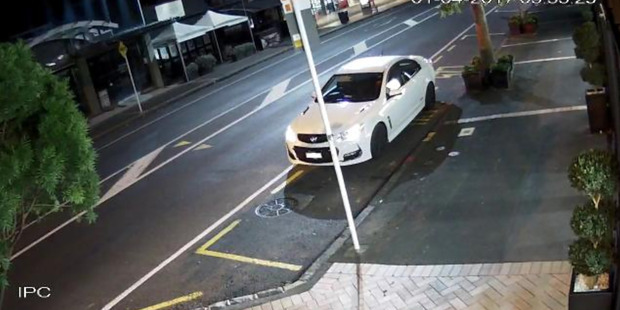
CCTV footage of the get-away car used in the theft of two Gottfried Lindaeur paintings. Photo / supplied. The paintings stolen in the Parnell ram-raid were both by Gottfried Lindauer in 1884 and were known as Chieftainess Ngatai - Raure and Chief Ngatai - Raure. They were about to be auctioned, and were estimated to be worth $1m together.
Czech-born Lindauer trained at the Academy of Fine Arts in Vienna and migrated to New Zealand in 1874.
He became one of the most prolific and best-known painters of Maori subjects along with Charles Frederick Goldie.
Marinello
said there was a possibility a ransom could be demanded for the
paintings' return or they could be used to access drugs or weapons or as
leverage in a "get out of jail free card".
He said the theft of the well-known paintings was unlikely to be an ordered grab.
If that was the case more care would have been taken, he said.
"We are not talking about stolen to order because of the way the smash and grab was done.
"My thought is it is common thugs looking to make quick cash."
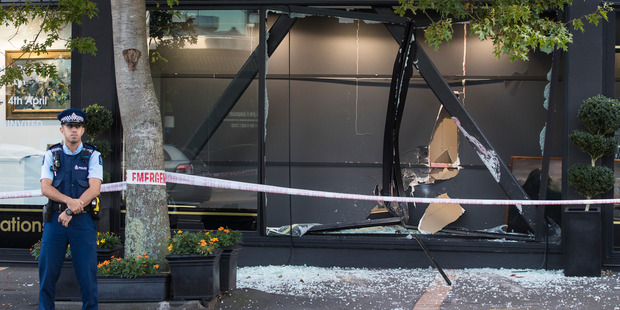
The International Art Centre in Parnell was robbed in a ram-raid and two Lindauer paintings were stolen. Photo / Jason Oxenham Marinello said paintings in a window attracted smash and grab theft.
"It's the sparkle in the window - they take what they can and they are off."
He said the paintings could be recovered soon - or could take as long as a decade.
Most works were recovered, because it was harder to sell stolen art than it was to take it in the first place, he said.
"There is a bit of a black-market of course but they are offered for only about 5 per cent of their value."
Marinello
said there was a market for the Lindauers overseas because they were
attractive works of art and that was why the Artive.org register was so
important.
If the pieces were recovered Marinello said their value would depend on damage done.
The high-profile theft of James Tissot's painting Still on Top saw it plummet in value.
The work was stolen from Auckland Art Gallery in one
of New Zealand's most high-profile art heists. Ricardo Sannd, also
known as Ricardo Romanov, walked into Auckland Art Gallery with a gun
and cut the famous work from its frame in 1998.
The painting was
found under Romanov's bed a week later but was so badly damaged tiny
pieces of it were found on the gallery floor for weeks.
Although it will never be sold the painting went from an estimated $8m to an insured $2m.
Marinello said some works increased in value because the theft contributed to the story.
"There was a Picasso that was stolen and the theft increased the value because it added to the colour of the work's story.
"That is not usually the case though."
Many
works were rolled up, treated badly and stored in conditions vastly
different to the temperature controlled environments of museums and
galleries.
"They are stored under beds, hidden away because they are that hard to sell," he said.
"I had a $6m painting handed to me in a garbage bag out the window of a Mercedes."
New Zealand art expert Penelope Jackson echoed Marinello's thoughts and concerns on the Lindauers' theft.
New Zealand art expert Penelope Jackson. Photo / supplied. She said there was a lot of speculation as to motive but said until the culprits were caught it was largely an unknown.
"We just have to hope they are recovered unscathed because at 130 years old these two pieces are very vulnerable."
Jackson said talk that the gallery should not have had art in the window was a shame.
"It would be a sad thing if we got to the stage where galleries can't display art because there is a risk of theft.
"It's hard to entice people into an auction with blank walls."
Police put alerts on New Zealand boarders after the theft and Interpol was notified. Police continue to investigate.
STILL MISSING
Most art stolen within New Zealand has been recovered.
The most famous piece still "at large" is Psyche - a 1902 work by British artist Solomon Joseph Solomon.
In her book art thieves, fakers & fraudsters - the New Zealand author Penelope Jackson outlines the mystery of the 1942 theft.
Theories include an inside job and a phoney burglary to cover up damage done by a cleaner.
Hopes were raised in 1982 when a man came forward and said he had seen the life-size reclining nude painting in a Napier house.
It ended up being a similar painting by a Christchurch art student.
Later in the year the gallery received a Polaroid of what was thought to be Psyche.
The photo was later revealed to be a hoax with the clever confession:
Dear Sir,
Psyches sleep, Psyches awake
Some are real, some are fake
Masterpieces are seldom met,
Touch this one, the paint is still wet.
Other recovered high-profile pieces include the 1997 theft of Colin McCahon's Urewera
mural stolen from a Department of Conservation visitor centre by Tuhoe
activist Te Kaha. The work was returned 15 months later after
negotiations.
In 1998 the $8m James Tissot oil painting - Still on Top - was stolen by career criminal Ricardo Sannd, also known as Ricardo Romanov.
Armed with a gun Sannd stole the painting, worth $8m, from Auckland Art Gallery. It was later found hidden under his bed.
Sannd was sentenced to nearly 14 years in prison for the crime.
In 2005 the statue Pania of the Reef was stolen from the Napier foreshore. The motive was never known but Pania was discovered a month later and recovered by police. She was restored, then replaced.
LOST MASTERPIECES
The Mystery of the $2.5 Million Rare Book Heist
In
January, three thieves drilled through the skylight of a building near
Heathrow Airport and rappelled 40 feet to the floor, bypassing the
security alarms, and making off with around $2.5 million-worth of rare
books.
There
is a special place saved in the pantheon of art thieves for those who
commit their crimes while displaying almost supernatural feats of
athletic prowess.
Thieves who climb up walls, through
windows, or prowl around raising nary an alarm get nicknames like
“Spideman” and “Ghost.” They have even inspired their own sub-genre of
thrillers—think Catherine Zeta Jones’s Cirque de Soleil-worthy
contortions to steal a valuable mask in Entrapment.
But it’s Tom Cruise’s vault heist in Mission: Impossible that is the most apt model when it comes to a recent theft of 160 antique books from a warehouse in London.
Late in the night on Jan. 29,
three still-unknown thieves drilled through the skylight of a building
near Heathrow Airport and rappelled 40 feet to the floor, bypassing the
security alarms.
They went straight to six specific crates
that contained three dealers’ worth of books that were en route to the
California International Antiquarian Book Fair in Oakland.
Over the course of several hours,
they unloaded the books they wanted into duffel bags, belayed their
loot to the roof, and took off in a waiting van. The haul totaled nearly
$2.5 million.
“Behind
these books there is a lot of work because we have to search to try to
find out where the books are—auction houses, collectors, colleagues—and
there’s big research behind these books,” Alessandro Meda Riquier, one
of the affected dealers, tells Sky News. “They are not only taking money away from me but also a big part of my job.”
Riquier was the owner of several of the most
noteworthy tomes that were taken in the heist. The most expensive book
was a second edition of Copernicus’s On the Revolutions of the Heavenly Spheres from 1566 in which the astronomer introduced his revolutionary theory that the sun—not the Earth—is the center of the universe.
That book alone is worth over $250,000. Among the rest of the trove are several rare editions of Dante’s Divine Comedy and a smattering of Galileos, Newtons, and da Vincis, among other titles from the luminaries of the early sciences.
All in all, it is the quantity of books stolen rather than the individual titles that make this heist so significant.
“The
books were there for only a short time in that warehouse, and this is a
very exotic commodity so this is not something that the average person
thinks that they can sell,” Jeremy Norman, a rare book dealer with a
specialty in the early sciences, tells The Daily Beast. “I think it’s a
real mystery. You really wonder how they knew the stuff was there, and
the timing of it, and how they were shipped off, and what the real
motivation was.”
Several theories have been offered as to why
the thieves went after this quarry. One suggests that this may have been
a “made to order” theft, one in which a buyer specifically commissioned
the thieves to take these titles.
Similar
to fine art, stolen antique books are very difficult to sell on the
legitimate market—and thereby net the title’s full value. When a rare
book crime becomes known, organizations like the Antiquarian Booksellers
Association of America (ABAA) quickly take action to alert their
members to the volumes that were stolen so dealers can be on the lookout
for anyone trying to offload a tainted treasure.
“If you’re a seller, you’re not going to want
to touch something that might remotely be even possibly stolen because
you’re going to lose a lot of face with your customer,” Susan Benne,
executive director of the ABAA, tells The Daily Beast. She points out
that the rare book market deals in a lot of repeat transactions, books
that change hands multiple times.
The difficulty of sorting out a stolen book
after it has made its way through a few owners ensures that most
booksellers are painstakingly principled when it comes to provenance.
“It’s
a real hassle to have to go back through the process of dealing with
insurance companies, with law enforcement,” Benne says, noting that
“above and beyond wanting to do the right thing anyway” dealing with
stolen material in the end isn’t worth it for dealers.
While
a wealthy collector with a gleam in his eye could have commissioned the
theft, the more likely scenario is that it was a crime of opportunity.
In this theory, a gang of nefarious local elements had help from someone
inside the warehouse’s operation who tipped them off to the presence of
the expensive cargo and the exact details of the books’ schedule and
location.
The shipment was only being
stored for a few days, so the opportunity to take the books, not to
mention the ability to quickly pick the correct crates out of a room
full of other goods that were left untouched, most likely required some
help. As Norman says, “to coordinate such a thing, this is like in a
movie, how would you know?”
But if this is
what happened, the three felons are most likely sitting somewhere
scratching their heads right now trying to figure out how to get rid of
their ill-begotten library.
“Maybe it was
tempting to professional thieves who didn’t understand that this isn’t
going to be something that you can fence like jewelry,” Norman says. “I
can tell you it’s not going to affect the prices of books, and it’s
going to be really hard for these books to be converted to cash if
that’s what they want to do.”
Another member of the community, Chris Marinello, CEO of Art Recovery International, offered The Guardian a more dire warning for what might happen if these thieves find it difficult to cash out.
“The books might then be broken up,” he says.
“Some of the illuminated manuscripts and engravings contained therein
might be traded in the art market, where many buyers don’t know they
were cut out of rare books. It becomes a lot more difficult to trace.”
The
antique book community is no stranger to crime, but the London heist
broke the previous mold. It’s not uncommon for rare bookstore owners to
catch someone slipping a book into their pocket—Norman says he dealt
with this occasionally at the store he owned for 30 years. And
institutions like libraries
that have a permanent collection of treasures are not immune to thefts,
whether from outsider thieves or by employees or visiting scholars who
are looking to make a few extra bucks on the side.
“I
mean the thefts that have been really disruptive and sort of shocking
in our world, a lot of them more recently have come from libraries,”
Benne says.
As a comparison to the London theft, Norman mentions the 1969 attempt on the Gutenberg Bible at the Widener Library at Harvard.
The
amateur thief lowered himself by rope into the room where the Bible was
displayed, packed the two volumes up in his backpack, and attempted to
scale back up to the roof. Unfortunately, he miscalculated how heavy the
tomes actually were—over 60 pounds when carried together—and he fell to
the ground. Needless to say, the crime was thwarted.
But incompetence isn’t the only thing that separates the 1969 attempted theft from the 160 books successful stolen in January.
“The
books in the Harvard Library were there for years. Everybody knew about
them, they weren’t going anywhere, you could target it. That [theft]
was daring and it flopped,” Norman says. “[The London theft] took real
skill… that’s got to be professionals. So now we’re up against
professional thieves, and we could have more trouble than we used to
have in the past.”
Hertford artist Alan Davie's window cleaner jailed for stealing paintings worth £500,000
A window cleaner who stole £500,000 worth of paintings from
renowned Hertford painter Alan Davie after his death has been jailed for
four years.
Daniel Pressland, 42, was aware of the value of Mr Davie's paintings and knew of weaknesses in the security at his home.
He
pounced when the Scottish artist died aged 93 in 2014, carrying out a
series of burglaries before being caught in the act with three paintings
in his van. READ MORE: World-famous artist's window cleaner accused of stealing art worth £500,000
He claimed he wanted to use the paintings, worth £90,000, as ramps to get his motorcross bike into his van.
Passing sentence at St Albans Crown Court yesterday (April 5), Judge John Plumstead described him as a "vulture".
He said: "You happened on an opportunity to get rich quick by stealing from someone who you had been worked for for years.
"You were like a vulture on a carcass and just helping yourself. You acted disgracefully."
image:
http://www.hertfordshiremercury.co.uk/images/localworld/ugc-images/276464/binaries/Alan%20Davie%20in%20his%20Hertford%20workshop.png Alan Davie in his Hertford workshopPressland
had worked for Mr Davie, whose work had been displayed at the Tate
Modern, since 2002, cleaning windows and doing odd jobs.
The judge
said Pressland had committed the burglaries not realising the art
gallery that acted on behalf of Mr Davie had a complete record of
everything he had painted or drawn in his lifetime and would know what
was missing.
During his trial, the jury heard that in all he took 31 paintings from the artist's home at Gamels Studio in Rush Green.
Sarah
Morris, prosecuting, said the works totaled half a million pounds in
value, but that £243,500 worth of art remained unrecovered. READ MORE: Items that inspired Alan Davie go on auction
The last of Pressland's break-ins took place during the day on April 2, 2015, almost a year after the death of Mr Davie.
Neighbours
of the painter, who had been admired by artists such as Jackson
Pollock, Mark Rothko and David Hockney, were concerned to see Pressland
at the house and putting large canvases into the back of a van.
Police were alerted and were quickly on the scene and caught the window cleaner as he was driving away.
The
jury was told that during an interview with the police Pressland told
them he kept his ladders in the painter's garage and, having gone there
to collect them, saw the three works of art which he assumed had been
"put out there for the rubbish".
image: http://www.hertfordshiremercury.co.uk/images/localworld/ugc-images/276464/binaries/Davie1.png Some of Alan Davie's paintingsBut
yesterday (April 5) before passing sentence Judge Plumstead said it was
quite possible Pressland had committed more break-ins at the home of Mr
Davie using his knowledge of the faulty upstairs window to gain entry.
Pressland, of Outward Common, Billericay, was found guilty of burgling
the home of the artist between April and August of 2014, when 11
paintings were stolen.
Fellow defendant Gavin Challis, 42, from Nazeing, was acquitted of possessing criminal property.
He
said he had taken Pressland at face value when he had offered him two
paintings for £5,000 and had no reason to believe he was buying criminal
property. The Davie works found hanging in his home were worth £26,000.
Mr Davie was born in Grangemouth, Scotland and went to the Edinburgh College of Art in the late 1930s.
See the Most Expensive Townhouse Ever Sold in New York City
A Depression-era mansion on Manhattan's Upper East Side sold yesterday for a record $79.5 million, according to public records, making it by far the most ever paid for a New York City townhouse.
That distinction used to belong to another Upper East Side property, the Harkness Mansion, when it sold in 2006 for $53 million.
David
Wildenstein, scion of his family's art fortune, reportedly sold the
41-foot-wide, 25,000 square foot limestone-clad mansion to a Chinese
hedge fund, according to the New York Post.
The Beaux Arts-style building, which has three stories and 20-foot high
ceilings, housed the Wildenstein art gallery for almost a century.
The property, though, is not without its share of controversy.
Billionaire
Len Blavatnik sued for millions last year after he believed Wildenstein
reneged on a verbal agreement to sell his firm the townhouse for $79
million, according to Bloomberg.
Blavatnik made the bid after the government of Qatar,
which was in talks to buy the property in 2014, balked at the last
minute. The home was then put back on the market for $100 billion.
News reports have accused the Wildenstein family fortune of being buoyed by an alleged history of dealing in Nazi-stolen art.
David's father Guy Wildenstein was recently cleared of charges that he attempted to launder money to avoid a French tax bill.
Taxidermy burglar sentenced after recovery of van full of stuffed animals
A member of a gang which stole taxidermy from a well-known dealer a year ago, has been sentenced
All the items stolen, included two full African lion mounts, two
infant zebras, a troop of baboons and a king penguin, were recovered.
Jason Robert Hopwood, 47, of Drummond Road, Romford, who pleaded
guilty at an earlier hearing to his part in the burglary and fraudulent
use of a registration plate, was sentenced to 21 months' imprisonment,
suspended for two years, at Kingston Crown Court on April 4. He was also
ordered to work 200 hours' community service.
The court heard how at around 19.30 on March 1, 2016, a burglary took
place at the warehouse of London Taxidermy at the Wimbledon Stadium
Business Centre.
An angle grinder was used to remove the padlocks and the doors forced
open. CCTV footage suggests the van left the scene around 20 minutes
later.
Valued at £100,000
Dealer Alexis Turner told ATG he had lost a significant
portion of his stock following the raid. However, many of the 27 stolen
items with a value of close to £100,000 were immediately identifiable.
Press coverage of the unusual nature of the crime aided in the recovery.
DC Stuart Goss, from Wandsworth CID, said: "I would also like to
thank the media, as I am sure reporting of our appeal forced the
criminals to abandon the stolen goods. Cataloguing and exhibiting the
stolen items was a truly unique and memorable experience”.
Acting on information three weeks after the incident, Essex Police
found an abandoned van in the Stapleford Abbots area in Essex. False
plates were believed to have been attached and inside were all of the
stolen goods. Turner told ATG he received all of the items back within a
month after forensic testing and his insurance company had paid out on
loss of income.
Hopwood, identified as the owner of the van, is the only member of
the gang to be prosecuted in relation to the theft. He was arrested on
September 29 and charged on November 10.
Photos of Guercino painting, rolled up like a rug by thieves, reveal extent of damage
The work was taken from an Italian church in 2014 and recently recovered in Casablanca
The altarpiece before (left) and after the theft
The first
photographs of the Guercino painting stolen from an Italian church in
2014, which was recently recovered in Casablanca, show the extent of
damage to the work. Reports in the Italian and Moroccan press suggest
that the 17th-century depiction of the Virgin Mary and two saints has
lost around a third of its surface paint. The majority of losses appear
to be on the lower part of the canvas. But any restoration work will
have to wait until the picture returns to Italy. Italian and North
African authorities are currently finalising the details.
The painting, entitled Madonna with the Saints John the Evangelist and
Gregory the Wonderworker (1639), was tracked to a suburb of Casablanca.
It was recovered in February after the thieves tried to sell the picture
for ten million dirham (around £800,000). According to the Italian newspaper Modena Today,
one of the men arrested in connection with the theft told the police
that the painting had been stored rolled up like a carpet, which likely
contributed to its current condition.
The altarpiece was stolen from the Church of San Vincenzo in Modena in
2014. At the time of the theft, the art critic Vittorio Sgarbi described
the picture as a monumental work that could be worth between €5m and
€6m.