Art Hostage Services
-
The Art Hostage team undertakes a wide range of services, including due diligence, collection conservation and management, risk assessment and security as well as legal issues, recovery and dispute resolution involving art and artifacts. Through partnerships with leading organizations, the Art Hostage team can provide a complete service for all aspects of collecting and protecting art.
A
celebrated Dutch art detective vows to recover missing masterpieces
stolen from the Isabella Stewart Gardner Museum and return them to their
rightful home after nearly three decades.
Arthur Brand, dubbed “The Indiana Jones of the art world,” tells me
that he’s spoken with sources in direct contact with what’s left of the
IRA.
They have convinced him some of the missing paintings are stashed
away in Ireland, and the reason that no one has come forward to claim
the $10 million reward offered by the museum is that those now in
possession of the art do not trust the FBI to simply let them walk away
with a windfall of cash with no questions asked.
“Members of the IRA only trust their mothers. That’s about it, so
there’s a high level of skepticism,” Brand told me in a telephone
interview from his home in the Netherlands. “The IRA and the Irish mob
have been known to hold art hostage and use it as collateral to get
prisoners out of jail. It’s what they do best.”
It was 29 years ago, in March 1990 that two thieves disguised as
Boston police officers stole 13 art works from the Gardner museum
including Vermeer’s “The Concert” and Rembrandt’s “Christ in the Storm
on the Sea of Galilee.” According the museum, it’s the single largest
property theft in the world. It’s also Boston’s most enduring crime
mystery, now that Whitey Bulger’s been captured and was subsequently
killed in prison.
Despite the potential IRA connection, the Irish mob boss had nothing
to do with this one. Bulger’s protégé Kevin Weeks once told me that the
gang wasn’t involved in the theft but shook every tree and beat down a
few people in an effort to find the loot and cash in on it themselves.
Brand agrees that Bulger wasn’t the guy.
“At the time of the theft, the IRA was running guns from Boston to
Ireland with and without Bulger’s knowledge,” Brand said. “The paintings
were hidden on one of the vessels and they would remain in Ireland
today.”
Brand’s theory isn’t shared by the FBI, which has gone to great
lengths in its effort to recover the paintings. The feds launched a
billboard campaign in 2014 to solicit the public’s help and have chased
after a geriatric, wheelchair bound Connecticut gangster named Robert
Gentile, who they have dubbed as a person of interest in the case.
The 82-year-old Gentile was released from his latest federal prison
stretch last month, apparently without providing any information as to
the whereabouts of the missing art.
“Gentile had every opportunity to cooperate with authorities and he
has not,” Brand says. “That tells me the FBI is going after the wrong
man.”
Some critics believe Brand is the wrong man for art enthusiasts to
pin their hopes on. The art detective is not above getting his hands
dirty and negotiating directly with underworld figures to recover stolen
art. Naysayers claim Brand’s approach will encourage more art theft.
But aren’t Brand’s methods one in the same with those of the Gardner
Museum?
The museum doubled its reward to $10 million for the safe return
of the masterpieces, guaranteeing both confidentiality and anonymity to
anyone who steps forward.
If that person is eventually Arthur Brand, you can bet it won’t be
anonymous.
The art sleuth, who once recovered two missing bronze horses
sculpted for Adolf Hitler, has cultivated a persona of derring do, using
false identities to cozy up with hardened criminals who have led him to
stolen art.
“Those who are hiding the Gardner paintings and are still distrustful
of American law enforcement can contact me and I would be more than
happy to return this world heritage to Boston,” Brand says.
The Boston office of the FBI will not comment on Brand’s theories,
but encourage anyone who is knowingly in possession of the stolen
artwork to return it to the museum and collect the $10 million reward. Casey Sherman is the author of 10 books including “12: The Inside
Story of Tom Brady’s Fight for Redemption.” Follow him on Twitter
@caseysherman123
Art Hostage comments:
Personally, I wish Arthur Brand all the luck in the worldin recovering the stolen Gardner art, however, I reserve my right to question the ethics, morality and legality of the other stolen art recoveries Arthur Brand and his criminal gang have made and continue to make.
I am sure the Irish Republican movement, IRA old and new, will not welcome the accusations from Arthur Brand, that they have the stolen Gardner art stashed away until they get paid the $10 million reward.
more to follow..................
Yet to be
revealed in the recovery of the stolen Picasso is the breakdown of payments
made to the Criminal Underworld and the intentions of the insurance company who
own the Picasso, after paying the Saudi Sheikh Abdul Mohsen Abdulmalik al-Sheikh
U.S. $4.5
million/$4,500,000 back in 1999 when it was stolen.
Richard "Dick" Ellis above
Dick
Ellis received his usual 10% of insurance payout, meaning Dick Ellis will get U.S.
four hundred and fifty thousand dollars $450,000.00
Arthur Brand above
Arthur
Brand will also get 10% of insurance payout U.S. four hundred and fifty thousand
dollars $450,000.00
Octave Durham Van Gogh Thief above
Octave
Durham, the convicted Van Gogh thief, who actually delivered the stolen Picasso
to Arthur Brand and Dick Ellis got U.S. one hundred and fifty thousand dollars
$150,000.00
Rob Van Meeson Frans Hals Thief above
Rob
Van Meeson, Frans Hals Thief, is a sidekick of Octave Durham, who was also present
when the Stolen Picasso was handed to Arthur Brand and Dick Ellis got U.S. one
hundred and fifty thousand dollars $150,000.00
Arthur Van Der Biezen Organised Crime Godfather lawyer
Represented
by Lawyer
Arthur Van der Biezen, The Organised Crime Godfather, who was the person holding the stolen
Picasso got U.S. eight hundred thousand dollars $800,000.00
This
means the outstanding bill for the insurance company is now U.S. $6,500,000.
The
insurance company on the premise of the passage of time intends to try and seek
a further U.S. $3.5 million $3,500,000 from the Saudi Sheikh Abdul
Mohsen Abdulmalik al-Sheikhbefore they return his stolen Picasso to him.
Meaning
the Saudi Sheikh has to pay the insurance company a total of $10 million to get
his stolen Picasso back.
This may
seem attractive given the stolen Picasso is now valued at $28 million, however,
the Saudi Sheikh might take exception at the payments to criminal underworld thieves
and Organised Crime Godfather, and feel the demands of the insurance company
excessive.
Plan B is
for the insurance company to claim full ownership and then sell the stolen
Picasso at auction for somewhere between $20-£30 million, giving them a net profit
of between $12 and $22 million.
Either of
the above scenarios could see the Saudi Sheikh Abdul
Mohsen Abdulmalik al-Sheikh resorting to litigation and legal action.
It must
also be remembered that another Picasso from the same year and only dated, not
signed sold in 2015 for $68 million, see link:
Law
Enforcement globally has raised their collective eyebrows at the actual recovery
of the Stolen Picasso, a classic Buy-back of stolen art, without arrests or
initial scrutiny, which will intensify if and when the actual payment amounts,
and who exactly the payments went to, are revealed.
It is
possible Arthur Brand could end up being regarded not as the Indiana Jones of
the Art World, but as the 21st century Jonathon Wild of the art
world.
Recall
Arthur Brand has made several high profile, high value art recoveries over the
last few years, not least the Tamara De Lempicka, and Savador Dali which were
also the subject of stolen art Buy-backs from criminals.
In that
case, once recovered, the Tamara De Lempicka was sold at auction for $9 million
dollars and like with the stolen Picasso recently recovered, payments were made
to criminals.
Dick
Ellis and Arthur Brand got 10% each for the Dali sale total $300,000
Arthur
Brand used part of his share of the two above sales to pay some cash up front for the stolen
Picasso, thereby allowing it to be released from the grip of the Organised
Crime Godfather.
Once
authenticated, the rest of the money for the stolen Picasso was paid to the two
handlers, Octave Durham and Rob Van Meeson, and the Lawyer Arthur Van der
Biezen representing the Organised Crime Godfather.
Dick Ellis history of buying back stolen art from criminals:
Breaking News Update April 4th 2019: https://waddesdon.org.uk/about-us/governance/gold-box-theft/ Some of the 100+ gold boxes stolen from Lord Rothschild, Waddesdon Manor back in 2003 have been floating around the Dutch criminal underworld for years. These could have been recovered years ago if payments were made to criminals. The UK police and Law Enforcment warned Lord Rothschild and his agent, Charlie Hill, if he recovered his gold boxes by paying a ransom he could be in legal trouble himself. https://www.theguardian.com/uk/2000/sep/03/jasonburke.theobserver Furthermore, The White Duck painting by Jean Baptiste Oudry stolen in Norfolk England, valued at $7.5 million and with a $150,000 public reward offered, has also been floating around the criminal underworld in the UK for years awaiting recovery, if the criminals get paid a ransom. https://www.thedailybeast.com/the-cezanne-stolen-in-the-perfect-art-heist-for-a-new-millennium Not forgetting, the Ashmolean Cezanne valued at $10 million is available for 20,000 euros ransom via Charlie Hill, who was told if he recovered it would face possible prosecution. Question is if any of these stolen artworks are recovered will the UK Police and Law Enforcement be as tolerant and forgiving as Dutch and French Police in the stolen Picasso case? Alternatively, Arthur Brand can resort to being handed some looted antiquities stashed away by his close friend William Veres, to hand back for no fee, to deflect from the buy back of the stolen Picasso? https://news.artnet.com/art-world/italian-police-crackdown-international-smuggling-ring-1313552
The Arthur Brand/Dick Ellis Extortion/Ransom Racket Handing back looted antiquities for no fee gives cover to the high value buy backs of stolen art, which bring in huge amounts of cash.
Thieves Trying to Steal Precious Painting Get Worthless Copy
“The
Crucifixion,” by the Flemish painter Pieter Brueghel the Younger, hangs
in a church in Northern Italy. But when thieves arrived to snatch it,
they got a copy planted by the police.
ROME
— The thieves who took “The Crucifixion,” a painting by the Flemish
artist Pieter Brueghel the Younger, from a church in a Northern Italian
town on Wednesday, knew what they were doing.
They
planned the heist at the church, Santa Maria Maddalena, for lunchtime,
when the parish priest was sure to be out. They worked quickly, smashing
the showcase protecting the 17th-century work with a hammer, before
jumping into a getaway car (a white Peugeot, according to Italian news
media reports) that screeched out of town. The speeding car attracted
the attention of a resident, who saw that the church door was wide open
(unusually so), and raised the alarm.
What
the thieves didn’t know was that the painting was a copy that had been
substituted for the original artwork a few weeks earlier, after the
carabinieri, Italy’s military police, were tipped off that burglars had
their sights set on the Brueghel.
The
only people besides the carabinieri who knew about the substitution
were the priest of the church and the local mayor, and in the hours
after the theft, they pretended to be distraught.
Advertisement
“We
had sworn to the carabinieri to keep mum, so at first I had to act like
I was desperate and fake grief over the loss,” said Daniele Montebello,
the mayor of Castelnuovo Magra, the town in Liguria where this all took
place.
The carabinieri pulled off a
“brilliant operation,” Mr. Montebello said, adding, in an interview
Thursday, “I don’t want to even think about the consequences had they
not switched the paintings.”
You have 2 free articles remaining.
News that the painting was a copy was leaked to the news media Wednesday night.
The
Rev. Alessandro Chiantaretto, the priest of Santa Maria Maddalena, said
he believed the thieves “must have studied my habits,” so they knew
when to strike. At lunchtime, he often brought communion to housebound
parishioners he explained in a telephone interview.
Officials for the carabinieri declined to comment on the case because the investigation is continuing.
The work is very similar to another by Brueghel the Younger, which bears the same name and is in the collection of the Philadelphia Museum of Art.
According to the municipal website,
“The Crucifixion” — painted in oil on five oak panels — was itself a
copy of sorts of a now lost work by the same name painted by Pieter
Brueghel the Elder, the artist’s father. A wealthy local family donated it to the church.
Thieves had successfully stolen the painting from the church in 1981, but the police recovered it a few months later.
The church has a closed-circuit camera system as well as an alarm system. It was not clear whether the alarm went off.
Father
Chiantaretto said the church usually remained open all day, so visitors
could pray or appreciate its artworks, including another depiction of
Christ’s crucifixion once attributed to Anthony van Dyck (it was later
revealed to be the work of a follower). The theft, he feared, would
force him to limit access. “When churches are like museums, you either
have staff or volunteers, or you close them, ” he said.
Mr.
Montebello said he didn’t know whether the thieves had been identified,
but said the carabinieri told him that it was “only a matter of time.”
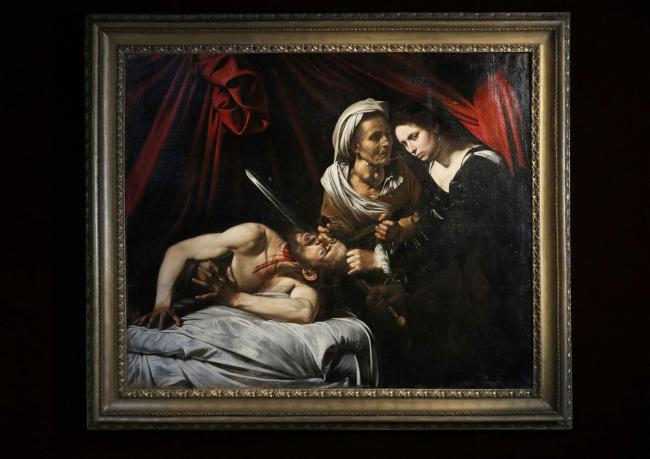
Caravaggio painting worth £129 million was almost stolen by burglars
The 'Lost Caravaggio' which
was discovered in the attic of a Toulouse farmhouse in 2014 is seen at a
press conference in central London. (Jonathan Brady/PA Wire)
A long-lost painting by the artist Caravaggio was almost stolen by
burglars years before it was rediscovered in an attic in Toulouse.
The work by the Italian master, found five years ago in a farmhouse in
the French city, was unveiled on Thursday in London after being
restored.
Burglars broke into the home and stole items including bottles of
perfume but left the painting as they thought it worthless, according to
auctioneer Marc Labarbe.
Titled Judith And Holofernes and valued at £129 million, the piece sat
for a century in anonymity against a wall between old clothes, family
antiques and crockery.
Speaking at the unveiling of the work at the Colnaghi gallery, Mr
Labarbe joked the burglars had not deemed the painting "adequate" enough
to steal it.
He said: "One of my clients was clearing his attic and he needed two
men to help him. It took a year to sell all the antiquities.
"Clocks, toys, pieces of religion, in good and bad condition, clothes,
crockery, as well as many things of no interest. Everything was very
dusty.
"I have to tell you that a few years before, burglars broke into the
attic and stole many things, included eau de parfum bottles.
"Fortunately, our painting was not adequate."
He added: "On the 23rd of April 2014, late in the morning, my client
called me again because he had found a painting and wanted my opinion on
it.
"I went to his house and climbed the stairs to the landing of the attic where the painting was displayed.
"At this moment there was what was like a fog across the whole canvas.
"The painting was blurry and it was almost impossible to see the
details, but I was impressed by the state of the composition."
According to Paris-based art appraiser Eric Turquin, the work was painted in 1607.
It depicts the biblical tale of Judith, a widow from the city of
Bethulia, who breaks the siege of her home by seducing the Assyrian
leader and beheading him.
It will be sold without reserve on June 27 in Toulouse at the La Halle
aux Grains, with Mr Labarbe saying: "This magnificent story began in
Toulouse. It has to continue in Toulouse."
The painting is Caravaggio's second version of the same subject, with the first painted in Rome around 1600.
The discovery means there are now 68 known paintings attributed to the
artist, who was born in 1571 and died in 1610 of suspected lead
poisoning from his paint.
Judith And Holofernes will be on display at Colnaghi at 26 Bury Street from March 1 until March 9.
FBI Found Over 40,000 Stolen Artifacts, Including 2,000 Human Bones, In an Indiana Home
Over
a period of 70 years, Donald Miller unearthed cultural artifacts from
North America, South America, Asia, the Caribbean, and Indo-Pacific
regions. Now, the FBI hopes to return the objects to their rightful
origins.
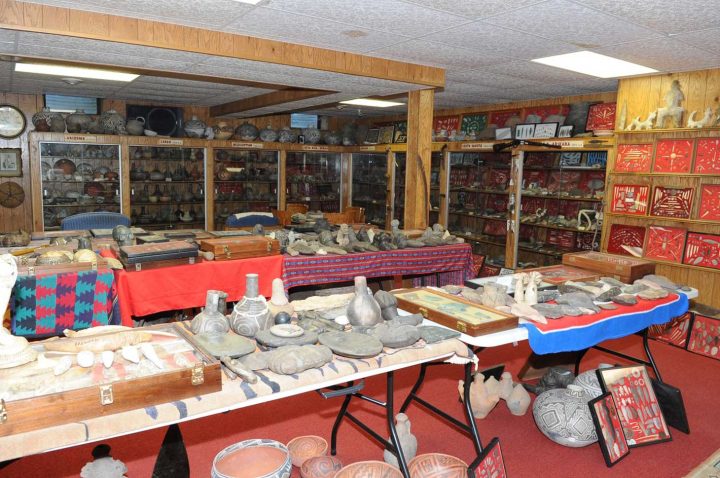
Donald Miller’s home museum (courtesy of FBI)We
all have fun little hobbies: gardening, bowling, or, like one man in
Waldron, Indiana, stealing other people’s culture, including the literal
bones of their ancestors. Four years ago, the FBI found more than 40,000
individual relics and works of art in the home of Indiana “collector”
Donald Miller, including pre-Columbian pottery, ancient weapons, and
items in a case labeled “Chinese jewelry” dated to 500 BCE. The objects
were arranged in a vast sort of home museum, and included specimens from
around the globe — thousands of which were sourced in violation of
antiquities laws and federal and state statutes. As reported by SF Gate, according to the FBI, Miller went on digs around the world and illegally brought his finds home to the United States.
But this Wunderkammer turned the corner into a wtfuckerkammer
when the FBI raid revealed some 2,000 human skeletal remains amid
Miller’s collection, revealing the man to be less a collector than a
grave robber (though arguably the line gets blurry at times).
It’s estimated the bones belong to 500 Arikara Native American
individuals, stolen from burial sites primarily in North Dakota. Though
the FBI first engaged with Miller in 2014, the grave-robber and
antiquities hoarder passed away in 2015 at the age of 91, leaving the
federal organization with a logistical nightmare, in terms of returning
the purloined remains and objects to their rightful places of origin.
As reported this week on FBI News,
the federal agency is now publicizing the case, along with an
invitation-only website detailing the items, in the hopes of gaining
further assistance from governments around the world and from Native
American tribes to locate their rightful origins. Since, for some 70
years, Miller actively unearthed cultural artifacts from North America,
South America, Asia, the Caribbean, and in Indo-Pacific regions such as
Papua New Guinea, the number of affected parties is complex, and the
disbanding of 7,000 items reclaimed by the FBI in 2014, as well as the
human remains which triggered their investigation, is only now being
realized.
“It
was a very complex operation,” Special Agent Tim Carpenter, who
oversees the FBI’s art theft program and who led the 2014 recovery
effort in Indiana, is quoted as saying.
“We are not treating this material as simply evidence. These objects
are historically, culturally, and spiritually important, and you have to
take that into consideration.” He added:
We are
dealing in many cases with objects that are thousands of years old. So
imagine a scenario where you take an artifact that was created 4,000
years ago, survived in the ground or a tomb, survived being looted,
survived being transported to the United States, has been in this guy’s
house for the last 60 years, and the FBI comes along and we pick it up
and we stumble and we drop it and we break it. That’s a pretty bad day.
The
mere physical delicacy of the objects in question fairly pales in
comparison to the delicacy with which the FBI must trace the rightful
provenance of these objects, which Miller liked to display to visiting
school groups (though the human remains he kept largely to himself, and
the occasional visiting serial killer who might be into that kind of
thing). Miller was a renowned scientist who helped build the first
atomic bomb, so presumably, his nightmares were haunted by many a
restless spirit, and not just those he had disinterred to add to his
collection.
As the affair inches towards its resolution, officials from China are due in Indianapolis this week to recover their relics, CBS reports.
But the whole situation raises timely questions about the line between
grave-robbing and archaeology. With the continuing struggle for people
like the Rapa Nui of Easter Island
to recover sacred artifacts taken by the British and held as cultural
treasures, the Donald Miller case is a sobering object lesson in white
entitlement to world culture, and the reluctance some have to return
what they have taken. According to the FBI, Miller was compliant with
their orders and expressed a desire to see the remains and stolen
artifacts returned to their rightful place in the world — but the
underlying issue seems to be the sense that it was ever okay to take
them in the first place.
The World’s Most Prolific Art Thief Has Just Explained His Motivation
Tourists
walk in the atelier of the Rubens house in Flanders, Belgium, an
institution from which Stéphane Breitwieser stole an ivory statue. Mark Renders/Getty Images
Most of us sail through life always striving to be better, existing
tepidly without definitive confirmation that we are (or ever were) at
the peak of our profession. Master art thief Stéphane Breitwieser has a
considerable amount of problems, but this is not one of them.
In a long profile published on Thursday at GQ
and written by author Michael Finkel, Breitwieser explains, in his own
words, just what exactly motivated him to pilfer more than a billion
dollars’ worth of artwork in hundreds of museums over the course of an
incredible tear of about six years. The saga also involved his mother
and his girlfriend (the latter two did not contribute to the story and
in fact have never spoken publicly about the infamous robberies).
Breitwieser
has been imprisoned more than once for his crimes, and is currently
once again incarcerated pending further investigation from French
authorities, who say they’ve found “Roman coins and other objects” in
his residence.
Finkel
points out that what’s perhaps most staggering about Breitwieser is the
“why” behind the unbelievable volume of his trophies, which were
famously destroyed by his mother
for reasons that are still unclear. The thief didn’t resell his items
on the black market, or seek to trade what he’d obtained for better
housing or travel.
He stashed everything in the house where he
lived with his mom and his girlfriend, because all he really wanted to
do was look at it. And the “why” behind this impulse of
obsession seems so ripe for a cinematic adaptation, it’s practically
tumescent. The thief’s father, you see, had abandoned the family when
Breitwieser was 22 years old and taken every item of value with him,
including a collection of antique weapons.
Stephane Breitwieser appearing on the French program ‘On n’est pas couché’ on October 7, 2006. On n'est pas couché/Youtube
The first thing Breitwieser ever stole from a museum was a
hand-carved gun that was dated to 1730. “His first thought, he recalls,
was that he should already own something like this,” Finkel writes.
Once
off to the races as a thief, Breitwieser set about amassing a trove of
Renaissance paintings, daggers and other artistic ephemera fit for a
king, but perhaps his favorite acquisition was an ivory sculpture of
Adam and Eve that had managed to survive his mother’s attempt to destroy
it (she allegedly threw it in the Rhone-Rhine Canal). In 2018, Finkel
returned with Breitwieser to visit the statue at the Reubens House
Museum in Belgium, from which he had initially stolen it decades
earlier.
The
thief is overcome, and cries for what can never again be his. “Art has
punished me,” he tells Finkel before pilfering a copy of the museum’s
catalogue—evidently that keenly-felt discipline at the hand of creative expression hasn’t quite tamed his criminal impulse.
This Classic Painting Hung
In a British Stately Home. Then Thieves Pounced.
In the
early 1990s, thieves hunted down Jean-Baptiste Oudry’s celebrated 18th-century
still life The White Duck, and absconded with it, along with several antique
clocks.
In 2013,
preparations for a celebrated homecoming were being made at Houghton Hall, the two-centuries-old family seat
of the storied Cholmondeley family, who, along with their aristocratic lineage
and grand estate, had passed down the title of Hereditary Lord Great
Chamberlain of England.
In 1779,
the descendants of Lord Robert Walpole, the first Prime Minister of England,
had been forced to sell off the bulk of his collection of Old Master paintings
to Catherine the Great in order to help pay off
debts and keep the family home in working order.
Now, 70
pieces from that early trove of works were temporarily returning home. During a four month-long exhibition, the canvases were to
take up their original seats of honor upon the wall and the home was to be
staged as it was during their reign.
But there
was one important piece missing.
Jean-Baptiste
Oudry’s celebrated 18th-century still life 'The White Duck' had survived the
sale to Russia as well as the various smaller listings and auctions that had
been periodically necessary during the ensuing centuries when funds were short.
But it
did not survive the sticky fingers of a group of thieves who invaded the house
in the early 1990s, hunted down Oudry’s painting where it hung in a sitting
room filled with French furniture, and absconded with it (along with several
antique clocks).
Authorities
believe the painting may now be in the hands of members of the Traveller community, but all efforts to recover
the work have so far been for nought.
The story
of 'The White Duck' begins in the early 18th century when Oudry was plying his
paintbrush in Paris and caught the attention of Louis XV.
In 1725,
at the age of 39, he was “invited, or rather commanded,” as art historian Amy
Freund wrote in a 2016 essay, to travel to Versailles
to paint a portrait of members of the king’s court. The commission went so well
that Oudry soon became a favorite of Louis the Beloved.
What
followed was a cascade of accolades for the talented painter. Oudry and his
family were invited to move into an apartment in the Tuileries Palace complete
with an art studio; he was given an exhibition at Versailles and appointed the “official painter to
the royal tapestry works at Beauvais,” a very lucrative honor.
He became
a professor at the Académie Royale de Peinture et de Sculpture and sold his
work to some of the top buyers of the day, including Count Carl Gustaf Tessin,
the Swedish Ambassador to France.
From his
early days as an artist, Oudry was inspired by the 17th-century Dutch and Flemish painters who specialized in
genre paintings particularly of hunting scenes. Oudry excelled at depicting
animals and had a special fondness for portraying dogs. (It was a portrait of
two dogs, Misse and Turlu, that had brought the painter to the attention of
Louis XV.)
Throughout
his career, the artist would become something of a jack of all styles when it
came to en vogue subject matter. He would paint portraits and historical
scenes, dip his brush into genre painting and still lifes, not to mention the
tapestry design that helped make him rich and famous. But, throughout it all,
he displayed a fondness and a keen eye for animals.
Two years
before he died in 1755, Oudry made 'The White Duck,' a trompe l’oeil still
life. The painting depicts a dead duck hanging upside down pinned by one foot
to the wall. A crumpled piece of paper skewered by the same hook reads “JB,
Oudry 1753.” The head of the duck lulls lifeless on a table covered by a
scrunched up cloth, a candlestick, and a round, shell-like covered bowl.
Despite
the grisly subtext of what could be taken as a post-hunt scene, The White Duck
is a beautiful painting, with the folds and texture
of every surface, the details of every object, rendered with a delicate
precision. The predominant color scheme is white, but the whites come alive in
the light and shadow, creating a nuance in monochrome.
The National Gallery of Art described the still life
as “a stylistic exercise in which the description of the textures and surfaces
of the objects is a breathtaking tour de force.”
“Appropriately
enough, since 'The White Duck' is about art and illusion, it has disappeared”
“It is a
painting engineered to show off Oudry’s skills in reproducing different
materials, objects and shades of white in confident, convincing perspective,
cheating life and death, defeating the laws of gravity and time,” writes
Victoria de Rijke in her book Duck. “Appropriately enough, since 'The White
Duck' is about art and illusion, it has disappeared.”
Oudry was
flying high as a famous French artist by the end of his life, so it’s no
surprise that Tessin snapped up this late-period painting “sight
unseen” before it was ever shown in an official exhibition. Soon after, 'The
White Duck' was acquired by the famed Walpole collection and began to make its
home in Houghton Hall.
Time has
not been kind to the grand country estates of England that require
tremendous resources and upkeep by aristocratic inheritors. For nearly a
century and a half, Houghton Hall suffered the same struggles and bouts of
being put on the market and rented out to tenants.
But the
grand home managed to stay in the Cholmondeley family, the descendants of
Walpole, and finally landed in the capable hands of the fifth Marquess and his
wealthy wife Sybil after WWI. The pair began to set about
putting the house back to rights.
By all
accounts, Sybil was a 20th-century grand dame of the most delicious order. She
was fun and witty and knew how to throw a party, even at the end of her long,
ten decades of life.
In 1984, Deborah Mitford, one of the famed Mitford sisters, wrote a letter to British writer Patrick Leigh
Fermor describing the 90th birthday party held at Houghton Hall for Sybil: “We
all made a monster effort, jewels galore &, a rare thing, there was exactly
the right number of people. Surrounded by the Oudry White Duck, many a
Gainsborough, Sybil’s mater by Sargent, the Holbein of a squirrel & ‘my
brother Philip’s Things’ positively gaudy among the indigenous Kent kit, French
clocks surrounded by sort of diamonds, eastern this & that all one size too
small but adding a lot, the royal people, seven minutes of block busting
non-stop fireworks seen through the fat glazing bars & the old glass which
is full of swirls & distortions, fires & flowers everywhere. Oh do try
& picture the scene.”
Less than
a decade later, the Oudry painting that had been witness to countless scenes
like this one over centuries hanging in the grand house was conspicuously
absent.
The
current Lord Cholmondeley hired the big guns to help track down the prized
family possession. Charles Hill, the former head of the Art and
Antiques Squad at Scotland Yard and who now runs his own private practice, has
been on the case. (Hill declined to comment for this piece at the wishes of
Lord Cholmondeley.)
A few
leads have surfaced over the years. It has commonly been thought that members
of the Traveller community were in possession of the painting, and in 2000,
the Guardian reported that a former police informer “believed
'The White Duck' was being hidden in the attic of a remote and rundown house on
moors near Newcastle.” In 2002, the case attracted some controversy when it became known that Hill had enlisted a former art
thief, David Duddin, to help find the work.
Despite
the trickles of information and suspicion, the painting valued at over $8
million remains missing from the walls of Houghton Hall. The theft is a tragedy for the Cholmondeley family
and for the legacy of Oudry, but it may not always be so.
After
all, if the grand estate knows anything, it’s that history is long and that
there is always hope that, like its relatives in Russia, 'The White Duck' will
return home once more.
Police believe stolen 17th-century Swedish crowns and orb recovered
Swedish crown jewels stolen by thieves
Dpa/Stockholm
The trial into the theft
of an orb and two 17th-century royal funeral crowns from a Swedish
cathedral took an unexpected turn on Tuesday, Feb 5th 2019 amid reports that some of
the missing items have been found.
Shortly before the proceedings opened, Stockholm daily Aftonbladet
reported that a security guard found some of the items in a garbage
container in a Stockhholm suburb early Tuesday. The newspaper cited
unnamed sources.
Prosecutor Reena Devgun told the Eskilstuna district court that the
proceedings would have to adjourn to allow the items to be inspected,
Swedish television SVT reported.
Tuesday was the third day of the trial.
Police later issued a statement saying ‘everything suggests’ that the
regalia have been found, adding that ‘police were working intensely to
confirm this 100 per cent.’
The man on trial, Nicklas Backstrom, is
charged with stealing a gold funeral crown, an orb made for King Charles
IX (1550-1611), and a crystal-studded gold crown made for Charles'
second wife, Kristina the Elder.
He has denied the charges although traces of his blood were found in the Strangnas Cathedral, west of Stockholm.
The court ruled that the hearing would adjourn after witnesses had
given testimony, and said the prosecution was latest Friday to report
back to the court.
The items were valued at 65 million kronor (7.2 million dollars). The
prosecution, art experts and the church have designated the items as
‘irreplaceable’ and part of the national heritage.
Russian Art Thief Confesses to Stealing Painting to Settle Debts — Reports
Denis Chuprikov / Interior Ministry
The suspect in one of the most brazen art heists in
recent history has confessed to having stolen prominent artist Arkhip
Kuindzhi’s painting over the weekend to pay for his debts, Russian media
have reported.
Kuindzhi’s 1908 “Ai Petri, Crimea” was briefly
stolen from Moscow’s Tretyakov Gallery on Sunday before police recovered
it in a basement on the outskirts of the city. The suspect, identified
as Crimean native Denis Chuprikov, 32, initially said he did not
remember what had happened that day.
Citing the investigation,
Russia’s Kommersant newspaper reported that Chuprikov had acknowledged
the crime after police showed him surveillance video of the heist, which
shows how a suspect casually lifts the painting off the wall and strolls past visitors.
“Chuprikov confessed to the theft, saying that he had decided on it spontaneously because of debts,” Kommersant reported Monday, citing unnamed sources.
Police
are looking for possible accomplices in what they are treating as a
pre-planned heist of an object of special cultural value, a crime that
carries a jail term of up to 15 years.
“Ai Petri, Crimea", a mountain scene, is worth around $1 million,
state television said, though it was insured for only around $200,000.
Chuprikov reportedly has a criminal record, including charges of drug
possession and police disobedience pressed in the last few months.
Police said that the artwork had been put up on sale on a popular online marketplace for a mere 2.5 million rubles ($37,000).
"In
a rating of the most stupid crimes of the 21st century, he has grounds
to deserve an honorable mention,” Vladislav Kononov, a Culture Ministry
official, was cited as saying.
Oops! British Aristocrat Accidentally Bought Stolen, 7th-Century Sculptures As 'Garden Ornaments'
Dutch art detective Arthur Brand poses with two limestone Visigoth reliefs from the seventh century in London on Jan. 20, 2019.
Credit: Niklas Halle'n/AFP/Getty
In 2004, two chunky limestone reliefs depicting Catholic saints
were stolen from a medieval church in Burgos, Spain. The reliefs dated
to the seventh century, weighed about 110 lbs.(50 kilograms) apiece and
were thought to be worth many millions of dollars. Earlier this week,
professional art detective Arthur Brand found them — moldering in the
dirt and leaves of a British country garden.
"The thieves wanted to sell [the reliefs] and make a lot of money, but
soon found out they stole world heritage that would be extremely
difficult to sell," Brand told the French news site AFP (Agence France-Presse). "So, they decided to sell them as garden ornaments." [30 of the World's Most Valuable Treasures That Are Still Missing]
According to AFP, those "ornaments" were purchased several years ago by
a well-off British aristocrat who had no idea about their true
provenance. Brand, who spent eight years tracking the reliefs from
dealer to dealer across Europe, estimates that the unwitting aristocrat
probably spent about $65,000 (50,000 pounds) apiece to add the artifacts
to his estate's garden north of London.
Sounds expensive for a trumped-up lawn gnome — but the buyer actually
got an epic deal. The true value of the reliefs, Brand told AFP, is "priceless."
"You can imagine how horrified they were to learn that their garden
ornaments were in fact priceless stolen Spanish religious art," Brand
said. "They got quite nervous, because these priceless 1,300-year-old
artifacts that were made for the Spanish sun were in their garden,
exposed to the English rain."
Following this revelation, the artifacts were safely returned to the
Spanish embassy in London on Monday (Jan. 21), AFP reported. They will
be restored to Spain's Santa Maria de Lara church, which was declared a
national monument in 1929. The church was built more than 1,000 years
ago by Visigoths
— a Germanic culture that ruled much of France and the Iberian
peninsula between the fifth and the eighth centuries — and is thought to
be one of the oldest Catholic churches in Spain, the director of the
nearby Burgos Museum told Spanish news site El Pais.
Brand has been nicknamed the "Indiana Jones of the art world" for his
impressive track record of relocating stolen objects. Some of his
notable finds include a 1,600-year-old mosaic
stolen from a church in Cyprus when Turkey occupied the country in 1974
(and finally recovered from a family in Monaco in 2018), two bronze horse sculptures commissioned by Adolf Hitler during World War II, and numerous works stolen from Jewish families during the Holocaust.
Irish
surgeon who staged burglary to claim £180k in ‘stolen art and jewels’
is found guilty – but wife cleared after saying she had no clue of
family cash
Anthony McGrath, 46, claimed antiques, artwork and jewellery were stolen from his home in Hertfordshire
A LEADING surgeon has been found guilty of faking a burglary to make a £180,000 bogus insurance claim.
Anthony McGrath, 46, claimed antiques, artwork and jewellery were stolen in a break-in at his rented cottage.
The audacious scam even included a supposedly lost 19th century Rococo red marble fireplace.
But the orthopaedic surgeon's scheme was uncovered by police who
spotted pictures he supplied of the items had been taken AFTER the
break-in.
Officers raided his family's stately home in Ireland and found
antique furniture, paintings, crystalware and jewellery he claimed were
missing.
Luton Crown Court heard flashy McGrath had been renovating his new
£1.1m home in St Albans, Herts, but his spending had 'run out of
control'.
His debts had spiralled to more than £1million.
McGrath was found guilty of four counts of an insurance scam fraud,
perverting the course of public justice, and three charges of mortgage
fraud.
WIFE CLEARED OF ANY WRONGDOING
His GP wife Anne-Louise McGrath, 44, was cleared of any involvement following the four-month trial.
She had told the court that with young children to care for and an
ailing mother she left much of the family’s financial affairs to her
husband.
Three mortgage applications were submitted by Mr McGrath to Lloyds
Bank between 2012 and 2015 supported by forged documentation in relation
to his and his wife’s earnings.
Antiques were also among the 95 items he claimed were stolen
A forged 'employment and income reference' purportedly sent from the
HR department of a hospital in Southampton where McGrath was working
during 2012 had inflated his earnings by nearly £10,000.
Before the scam, the surgeon had been trying to raise funds by selling off antiques
Group of Seven painting worth $200,000 stolen from Toronto home
Toronto police say the painting called “Sun Gleams: Autumn, North Saskatchewan” is an original piece of art by A.Y. Jackson.
TORONTO — Police say a Group of Seven painting has been stolen from a Toronto home.
Toronto police say the painting is an original piece of art by A.Y. Jackson and was stolen along with other items.
They say officers were called about the
break-and-enter on Friday where the painting called "Sun Gleams: Autumn,
North Saskatchewan" was reported missing.
Investigators say the painting is oil on canvas and is worth more than $200,000.
The Group of Seven consisted of painters best known for capturing Canadian landscapes in their work.