
This re-purposed Dismaland sign was intended to highlight the "Dismal Aid" offered to refugees. Instead, it was stolen.
Photo: Lee McGrath/Lincolnshire Aid 2 Calais
Photo: Lee McGrath/Lincolnshire Aid 2 Calais
Building accommodations for migrants in France was an admirable way to re-purpose the raw materials of Banksy's Dismaland.
But was the new signage, intended to draw attention to the “Dismal Aid"
provided in these makeshift camps, just making a difficult situation
worse?
Onlookers at the notorious camp in Calais
criticized the ostentatious lettering last week by taking it down—but
perhaps less out of protest and more out of opportunism.
One aid worker, Lee McGrath
from Lincolnshire, took part in dismantling the letters. "I hear they're
going to try and sell it on eBay, but they can't because I went and
took an 'i,'" McGrath told NBC News.
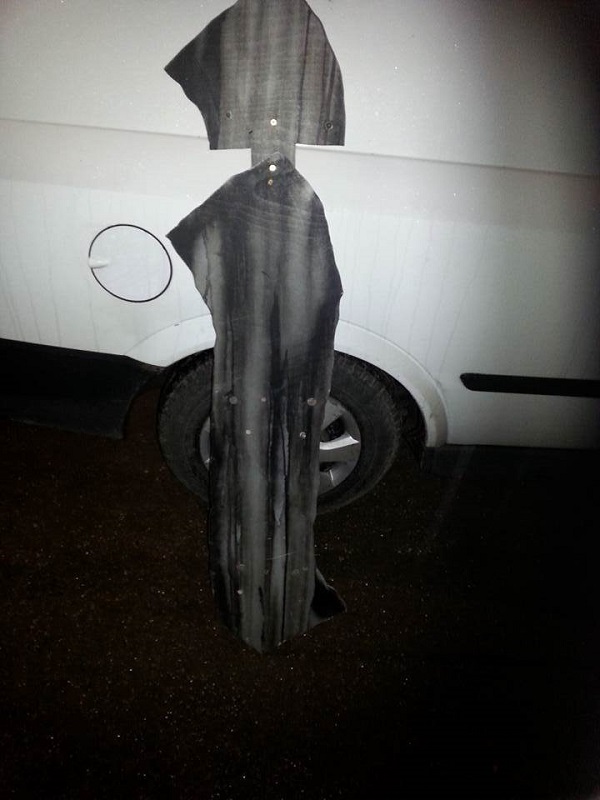
Aid worker Lee McGrath claims he took this "i" from the Dismal Aid sign.
Photo: Lee McGrath/Licolnshire Aid 2 Calais
Photo: Lee McGrath/Licolnshire Aid 2 Calais
"If anyone wants to sell the sign to make a
profit, they can't because I've got part of it," McGrath said. "I'm not
telling you where it is, but it is secure."
(If the anonymous thieves really do attempt an eBay auction, they might first want to watch the film "How to Sell a Banksy".)
Speaking of anonymity, it seems the art
world's next mystery philanthropist might be someone who already has
quite a bit of fame: Jaden Smith. The 17-year-old Renaissance
teen recently told GQ of his plans to disappear in order to become an anonymous artist.
“No one will know where I am in ten
years…It'll be kind of like Banksy," he said. "But in a different way.
More of a social impact. Helping people. But through art installations.
It'll be like, ‘This just happened that helped a bunch of people over
here. We don't know who did it, but these symbols and things were left
around, so we can only guess that it's Jaden and the squad.'"
Canal killing not linked to organised crime: police
A detective has said the reasons why an Italian art thief was found dead bound and tied to a shopping trolley in a London canal are known by people living close to the murder scene, and have nothing to do with his alleged links to organised crime or travels around the world.The body of Sebastiano Magnanini, 46, was found last Thursday in the Regent’s canal near Kings Cross, north London, after it came to the surface of the shallow waterway.
Detective chief inspector Rebecca Reeves, who is leading the investigation, said she did not believe the death was linked to his past conviction for art theft or to organised crime.
“The people who know how he died are living locally,” she said. Reeves would not say whether the victim was known to police in the UK.
Magnanini’s family in Italy and friends in London described him as a gentle man. Reeves said: “This has been devastating for Sebastiano’s family. He was a much-loved son and saw his family regularly as he travelled between Italy and London for work.
“His life in Italy, before coming to London, will inevitably form part of the investigation, but at this early stage we are not looking at organised crime as a motive.”
Police believe Magnanini was weighed down with the shopping trolley to conceal his body below the surface. They do not yet know how he died, but he was not shot or stabbed.
He was last seen alive on September 22, two days before his body was discovered. He was found in the same clothes he had worn when finishing a day of working as a carpenter in south London. Police say he specialised in stage construction.
Magnanini’s body was recovered yards from where twins were found murdered 19 years earlier. Their bodies had been wheeled there in a shopping trolley before being dumped in the canal.
Reeves said that after leaving work on September 22 Magnanini was seen in a pub opposite Victoria station, then in Euston and finally around Kings Cross at just before 7pm. Witnesses say there was nothing to suggest he was anxious or in trouble.
Friends and family of Magnanini, who grew up in Venice before moving to London and travelling to Vietnam and Cambodia, have spoken out against his portrayal as an art thief and a criminal, saying he had turned his life around.
Magnanini was jailed for 18 months in the late 1990s after stealing an 18th-century painting worth nearly 2bn lire (then about £1mn) from a church.
But friends from his time as a tour guide with an Italian company in Cambodia in 2009 said he was not a criminal and was “a wonderful human being”.
Luke MacKenzie, who became friends with Magnanini when he arrived in Cambodia, said he and the Italian’s family were devastated at how he was being characterised.
“Sebastiano’s friends here in Cambodia are very worried about the media painting him in a bad light, he is so far from a bad person,” he told the Guardian. “He stole an art piece, but I met him after all that happened and he wouldn’t hurt a fly.
“This is horrible for his family. I’m determined for his name to go down in history as a quality, standup guy. He didn’t talk about what happened in the past, he had told a few friends what he’d done, but just by knowing him you knew he was genuinely trying to turn over a new leaf. He was a new man and a wonderful human being who will be sorely missed.”
Is the Bührle art collection in Zurich, one of Europe’s most highly regarded private repositories, doing enough to locate the owners of works of art that the Nazis may have stolen?

A new book has rekindled the controversy, while the Zurich Museum of Fine Arts, or Kunsthaus, is preparing to display a large number of the collection's paintings.
Meanwhile, the Swiss government wants to boost efforts by museums to research the ownership history of the works they house.
The very title of the new book is slightly sulphurous. “The Bührle Black Book” (in German), co-authored by Thomas Buomberger, historian and journalist, and the art historian Guido Magnaguagno, aims to reopen the debate on the art collection of German-born industrialist Emil Bührle (1890-1956), who made a fortune selling arms to Nazis and the Allies during the Second World War.
The timing of the publication is significant. Subtitled “Art stolen for the Zurich Kunsthaus?”, the book has appeared just as the art museum is starting construction of a new wing.
Much of the Bührle collection – which includes paintings by Monet, Cézanne and Van Gogh among its 190 masterpieces – will be housed in the extension, which should be completed by 2020.
The conditions under which Bührle (pictured opposite) purchased the works are already widely known, thanks in particular to the Bergier Commission, whose research into Switzerland's relations with the Nazi regime was published between 1998 and 2002.
‘Gurlitt effect’
So why has this book appeared now?In the view of Tim Guldimann, a former Swiss ambassador to Berlin who took part in a public debate on the work, the renewed interest is mainly due to the so-called Gurlitt affair.
Cornelius Gurlitt was a German art dealer who bequeathed his estate, including some possibly looted works, to the Bern Museum of Fine Arts.
The book's authors, meanwhile, say they felt it was important to draw attention to the fact that an institution that receives public subsidies, the Kunsthaus, was preparing to host works of possibly unsure origin.
According to them, not enough research has been done into the provenance of all the paintings. Nineteen cases are detailed in the “Black Book”.
The foundation reacts
In a position paper issued following the book's publication, the Bührle Collection Foundation reiterated that provenance of 15 of the works is certain.“The authors (of the book) are willfully turning a blind eye to the fact that gaps concerning changes of ownership that occurred 70 years ago do not automatically and necessarily mean that they were the result of unlawful expropriation," it said.
The Zurich Kunsthaus vehemently disputes the book’s allegations. “At no point in the past two years did the authors consult the archives of the Bührle Collection Foundation or those of the Kunsthaus, which are public,” says the art museum's spokesman, Björn Quellenberg.
Expanding the concept of stolen art
“The facts already known about the provenance of the works were presented during the Bührle Collection exhibition in 2010. They can also be found on the collection's website,” adds the spokesman.Another part of the collection, never shown to the public, is currently being digitised, a process expected to be completed by 2020.
The authors of the “Black Book” call for a broader debate on plundered art. In their view, Switzerland should recognise the category of works “whose loss was a consequence of persecution by the national-socialist regime.”
This includes intentional sales made under duress by owners of artworks who were facing persecution and possibly fleeing for their lives.
“The fact that these changes of ownership are considered legal is totally foreign to reality,” says Thomas Buomberger.
He believes that Switzerland should follow the example of Germany, which “allocates considerable resources to provenance research, as, in many cases, the heirs have not yet requested restitution.”
Recognised only in Germany
The international community does not yet recognise this category of looted art. A study commissioned by the Swiss Federal Office of Culture found that Germany is the only country that has included this concept in its legal standards.“The particular history of Germany, where the property of Jewish families was systematically looted and many works were placed in public museums, gives it a special responsibility,” said Benno Widmer, head of a Swiss office on looted art.
The Swiss cabient has nonetheless said it is “open” to recognising this kind of work, but only if the situation changes within the international community.
New federal aid
The Swiss Confederation hopes to boost research into provenance of artworks by museums. A report published in 2010 showed many gaps remained in the efforts of 551 institutions between 2008 and 2010.The government considers it “very important that such research is conducted and published and that fair and equitable solutions are found quickly for the looted works,” Widmer said.
Yet many museums complain that that they do not have the necessary resources to carry out long and difficult research into the ownership history of the works in their collections.
From next year, however, they will no longer have grounds to complain about lack of support from the Confederation. Last May, the Federal Council announced plans to provide financial support for such research projects.
“We are currently preparing the support concept, which should be ready by the end of the year,” Widmer said. The exact amount of the support has not yet been established.
CIA documents
The Zurich Kunsthaus welcomes the new measure and emphasizes that the work carried out by the Bührle Collection is already “in all respects exemplary.”Some restitution claims were withdrawn following the publication of CIA archives showing the works in question had not been “contaminated” by unlawful purchases linked to Nazism.
In September 2014, Widmer said, the Jewish Claims Conference gave high marks to Switzerland for its “substantial” progress in this area.
A chapter called “The Bührle Paradox,” written by Hans Ulrich Jost, historian and professor emeritus of the University of Lausanne, describes Bührle as a non-ideological student of art history, literature and philosophy before the First World War.
His machine tool company owed its flourishing trade with Germany during the war in large part to the Swiss government, which “decided to offer economic and financial services to the Nazi regime so that the country would be left alone”, according to Jost.
“But once the Nazi defeat was imminent, the Swiss authorities dropped Bührle, who was a perfect scapegoat,” Jost added, though Bührle got “around ten times richer during the Second World War” than his direct Swiss competitors.
European art, held hostage by capital
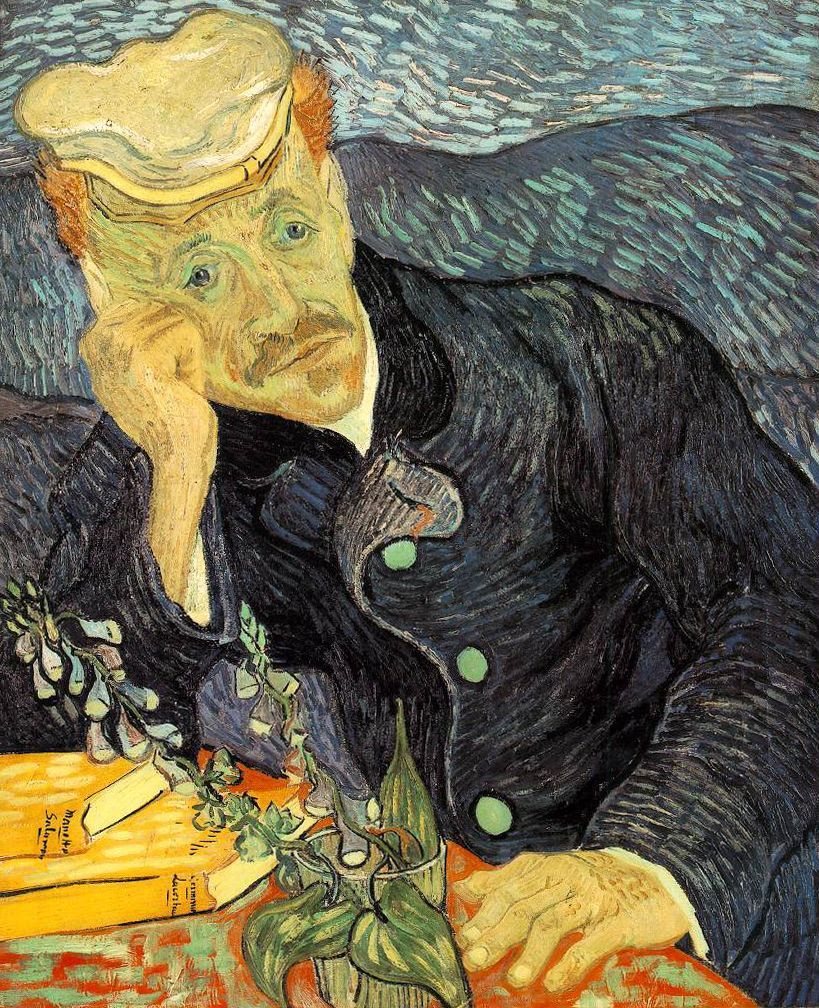
In 1990, Japanese paper magnate and art collector Ryōei Saitō purchased a Van Gogh at a Christie’s auction. He paid 82.5 million US dollars, making “the Portrait of Dr. Gachet” the world’s most expensive painting at that time. Saitō died six years later. In his will, he ordered the portrait to be placed in the coffin along with his body and cremated. Since then, nothing is known about the whereabouts of the masterpiece.
Art in no-man’s-land
International art markets are booming. This often makes speculation on works of art less risky and more profitable than investing in stocks. And a booming international market needs an international infrastructure.
Le Freeport is a 22,000-square-meter storage facility adjacent to Luxembourg’s Findel airport. Around 60% of the space is rented to firms that deal with art. They sell, buy, and store it — all at the free-port zone. According to The Economist, Le Freeport is well equipped to handle works of art. Among others, it features temperature and humidity control and an array of on-site services, such as valuation and renovation.
Additionally, the facility offers wealthy art collectors and traders a triple protection: high security, maximal discretion, and minimal taxes. Works of art that are stored in Le Freeport are exempt from both VAT and customs duty. Art sales that are conducted inside the facility can also be done tax-free.
Free-ports are an offshoot of bonded warehouses, where goods in international transit can be stored temporarily without payment of duty. But, increasingly, free-ports are being used as a long-term storage of wealth and a tax-free space for doing business. There is a network of such warehouses around the world. It’s a fiscal no-man’s-land.Free-ports are being used as a long-term storage of wealth and a tax-free space for doing business. There is a network of such warehouses around the world. It’s a fiscal no-man’s-land.
But it is also an integral part of the infrastructure of the global capital that occupies the seam between nation-states and their rule of law, widening these cracks.
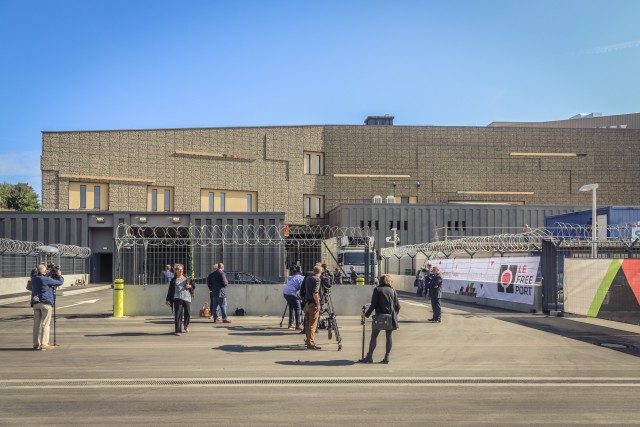
State authorities are increasingly concerned over their lack of knowledge about what is being stored in free-ports, and who the owners are. The suspicions are that free-ports might be playing an important role in international money laundering and in dealing with stolen goods.
Yves Bouvier is the Luxembourg free-port’s largest investor. Bouvier has also invested in a free-port in Geneva and in Le Freeport’s branch at the international airport of Singapore. “The Freeport King” has recently come under scrutiny for selling works of art — among others, several Rothkos and Picassos — to Russian billionaire Dmitry Rybolovlev for a total amount of 2 billion US dollars. Bouvier was arrested on suspicion of selling the paintings for inflated prices and allegations that some of them had doubtful origins.
Billionaires’ melancholy whims
“I’ve done the portrait of M. Gachet with a melancholy expression. There are modern heads that may perhaps be looked back on with longing a hundred years later,” wrote Vincent van Gogh in a letter to his sister in 1890. He was wrong. Exactly a hundred years later the painting’s fate was sealed and it was doomed to extinction.
The painting’s provenance is intimately intertwined with European history. When National Socialists ruled in Germany, it went through the hands of the Reich’s Ministry of Public Enlightenment and Propaganda. They wanted to purge Germany of the so-called “degenerate” art, removed it from the city gallery in Frankfurt and sold it to a private collector.
No wonder there was shock and a wave of loud protests surrounding Saitō’s decision to take the portrait of the melancholy head with him to the netherworld. A painting that survived the Nazis is now lost to humanity at the whim of a billionaire.More often than not, invaluable artifacts of European cultural heritage that are stored in free-ports were never meant to be displayed in living rooms. They increasingly become tenders of global capital and its hostages.
However, that was a burial of a single painting. A network of free-ports around the world is scaling up the graveyard business. More often than not, invaluable artifacts of European cultural heritage that are stored there were never meant to be displayed in living rooms. They increasingly become tenders of global capital and its hostages.
Forget the Louvre in Paris, forget London’s National Gallery or Berlin’s Gemäldegalerie. The Wall Street Journal estimates that the free-port in Geneva “may house the most valuable art collection in the world.” But, of course, one cannot say for sure which Picassos, Van Goghs, or Monets are in the vaults, as these are, as a rule, secret.
Burglars face prison after pleading guilty to stealing antiques worth more than £75,000
FATHER and son burglars and a trader trawled wealthy villages to steal antiques worth more than £75,000 from vulnerable elderly residents.Businessman Paul Ansbro knocked on doors at rural homes to find victims before Steven Abberley and his teenage son Mason Abberley broke in and stole treasured possessions ranging from silverware to wooden cabinets.
Antiques dealer Ansbro would knock the doors under the ruse of buying and selling antiques and then arrange for the father and son duo to burgle the homes.
They would either enter the homes while people were away or while the occupiers were asleep at night.
The trio, all from Hove, targeted homes in Goring, Washington, West Chiltington, Cowfold, Friston, Glynde and North Chailey as well properties in Hampshire, Wiltshire, Essex and Cambridgeshire.
At Hove Crown Court Steven Abberley, 42, of Findon Close, admitted 12 charges of burglary.
His son Mason, 19, of Ventnor Villas, admitted eight burglary charges. Ansbro, 54, of Westbourne Gardens, pleaded guilty to four burglary charges. The 12 burglaries took place between December 31, 2013, and February 4, 2014.
Ansbro also pleaded guilty to two additional counts of handling stolen goods, on December 31, 2013, and on January 7, 2014.
Two other men, also appearing as part of the same hearing, were Keith Mollon, 59, of Nicolson Drive, Shoreham, and Timothy Delay, 59, of The Drive, Hove. The prosecution offered no evidence against Delay and he was discharged. Mollon pleaded guilty to possessing a small amount of cocaine and was given a 12-month conditional discharge.
Charmaine Wilson, defending Steven Abberley, told the court: “This is a man who has a number of health difficulties at the moment.” She added that he was undergoing counselling for suicidal thoughts and was a carer for his mother.
Mark Kessler, defending Mason Abberley, reminded the court that he was 18 when the offences occurred.
Jeffrey Lamb, defending Ansbro, said: “He’s a businessman and he wants the chance to put his house in order. He’s also involved in two charities.”
Judge Anthony Niblett said: “All these are very serious matters. Only immediate custodial sentences can follow.
“Given the fact that each of them has had the courage and good sense on the best legal advice to enter guilty pleas, I consider that it’s right to renew bail.
“The outcome is a satisfactory one in the public interest. None of you should be under any illusion. These are serious matters and a custodial sentence is inevitable.”
The three men will be sentenced on Friday, November 20.
Sentencing guidelines address heritage and emotional loss
19 October 2015Written by ATG ReporterCentral to the spirit of the new guidelines is the understanding that the value of stolen items to victims is not just financial - something absent from the previous, more 'matter-of-fact' system.
The council also recognises the impact that shop or stall thefts can have. In the shop theft guideline, it emphasises not only loss of business but also takes into account that the size or type of business can make the shop owner particularly hard hit by thieves.
Sentencing guidelines address heritage and emotional loss
19 October 2015Written by ATG ReporterCentral to the spirit of the new guidelines is the understanding that the value of stolen items to victims is not just financial - something absent from the previous, more 'matter-of-fact' system.
The council also recognises the impact that shop or stall thefts can have. In the shop theft guideline, it emphasises not only loss of business but also takes into account that the size or type of business can make the shop owner particularly hard hit by thieves.
Europe, US, then Pink Panthers hit Wafi… How Dubai cops busted gang
Dubai Police thanks Sheikh Saif bin Zayed for support following arrest of mastermind

Commander-in-Chief of Dubai Police, Major General Khamis Mattar Al Mazeina, at a the press conference on Monday. (Supplied)
In a press conference on Monday, Commander-in-Chief of Dubai
Police, Major General Khamis Mattar Al Mazeina, thanked Lt. General
Sheikh Saif bin Zayed Al Nahyan, Deputy Prime Minister and Minister of
the Interior, for his confidence in Dubai Police and UAE security
forces.
Al Mazeina also expressed his sincere gratitude to the Minster of the Interior for praising Dubai Police's efforts in the arrest of the fourth suspect and the brains behind the Wafi Centre heist, which dates back to 2007.
"All thanks to Sheikh Saif, for the support and diligent follow-up on the case," Al Mazeina said. "After eluding justice for eight years, we caught the fourth member of the Pink Panther gang as promised."

34-year old Serbian, Borko Ilincic, latest arrest in case. (Supplied)
Al Mazeina added that Lt. General Dhahi Khalfan Tamim, Deputy Chairman of the Dubai Police and General Security, has dedicated special attention to maintaining the levels of security and safety achieved by the MoI in the quest to make the Dubai one of the best cities in the world in terms of safety and security.
"We at Dubai Police are proud of this unique achievement, and we shall maintain the highest levels of perseverance and commitment to crime prevention.
“Dubai Police are keen on fulfilling the UAE 2021 Vision to become one of the safest countries in the world," he added.
Al Maziena said, "In April 2007, a group of robbers brazenly drove two vehicles into the Wafi Centre, smashed the front window of the Graff store, and escaped with jewellery and watches worth approximately Dh15 million, stolen in less than a minute.
"Afterwards, the getaway cars were found burned out in the desert and the culprits simply vanished. The Pink Panthers had struck again."
Al Mazeina added, "Two suspects, both Serbian nationals, were apprehended within weeks of the robbery, while a third was captured last year in the Spanish city of Alcala de Henares. Nicola Milat, 33 a Serbian company proprietor, was sentenced to a 10-year jail term for aiding and abetting the robbery, and deported in 2013.
"The second suspect, Milan Mitlic, 52, a Serbian visitor, was set to walk free as the court acquitted him of the charge of possession of stolen items. The third, Martin Sofboda, was extradited to the UAE from The Netherlands."
Al Mazeina continued, "Meanwhile, Dragan Nikolic is serving a seven-year jail term in Liechtenstein where he has been since 2010 after being arrested in France in 2008. Similarly, after being arrested in Monaco and deported to Liechtenstein, Marinko Marick is serving time in jail until 2019.
"Dubai Police's CID received a fourth suspect on October 14, the 34-year old Serbian, Borko Ilincic, who was arrested early last year in Alcala de Henares.
“He was using a false name and fraudulent Bosnian passport.
"Meanwhile, Interpol Red Notices have been issued for Nicolas Zivkovic and Bojana Mitic as they are wanted for justice," Al Mazeina added.
Towards the end of the conference, Al Mazeina thanked the international community for their confidence in Dubai Police. Quoting Ronald K. Noble, the Interpol former Secretary-General, who said, "Interpol lauds Dubai Police work in unravelling the Pink Panther case.
“The Dubai Police investigation into the Wafi Centre heist has helped Interpol identify the methods of the international jewel thief gang, the Pink Panthers, which has carried out 90 daring robberies in Europe, the USA and Asia, including the Middle East, Serbia and Japan."
It is not yet known what was stolen due to the amount of debris at the shop, said Thames Valley Police.
Owner Tom Keane told BBC Radio Oxford it looked like a "bomb had gone off".
He added: "The term 'break-in' is an understatement, we were rammed with a bulldozer through the wall.
"At the moment we can't find anything that's been taken but there's thousands of pounds worth of items damaged or lost, totally obliterated."
Mr Keane, whose shop was targeted in a raid last December where an estimated £150,000 worth of goods was taken, said this raid was "a lot more serious" and he was unsure when he would reopen.
The suspects, described as three men wearing dark clothing, drove away in a convoy of vehicles towards Postcombe.
PC Jason Walsh said: "Unfortunately the owner of the shop has been a victim in other burglaries previously in which high value antiques and jewellery were stolen.
"The offenders knew what they were doing and went to extreme lengths to enter the building at all costs."
Al Mazeina also expressed his sincere gratitude to the Minster of the Interior for praising Dubai Police's efforts in the arrest of the fourth suspect and the brains behind the Wafi Centre heist, which dates back to 2007.
"All thanks to Sheikh Saif, for the support and diligent follow-up on the case," Al Mazeina said. "After eluding justice for eight years, we caught the fourth member of the Pink Panther gang as promised."
34-year old Serbian, Borko Ilincic, latest arrest in case. (Supplied)
Al Mazeina added that Lt. General Dhahi Khalfan Tamim, Deputy Chairman of the Dubai Police and General Security, has dedicated special attention to maintaining the levels of security and safety achieved by the MoI in the quest to make the Dubai one of the best cities in the world in terms of safety and security.
"We at Dubai Police are proud of this unique achievement, and we shall maintain the highest levels of perseverance and commitment to crime prevention.
“Dubai Police are keen on fulfilling the UAE 2021 Vision to become one of the safest countries in the world," he added.
Al Maziena said, "In April 2007, a group of robbers brazenly drove two vehicles into the Wafi Centre, smashed the front window of the Graff store, and escaped with jewellery and watches worth approximately Dh15 million, stolen in less than a minute.
"Afterwards, the getaway cars were found burned out in the desert and the culprits simply vanished. The Pink Panthers had struck again."
Al Mazeina added, "Two suspects, both Serbian nationals, were apprehended within weeks of the robbery, while a third was captured last year in the Spanish city of Alcala de Henares. Nicola Milat, 33 a Serbian company proprietor, was sentenced to a 10-year jail term for aiding and abetting the robbery, and deported in 2013.
"The second suspect, Milan Mitlic, 52, a Serbian visitor, was set to walk free as the court acquitted him of the charge of possession of stolen items. The third, Martin Sofboda, was extradited to the UAE from The Netherlands."
Al Mazeina continued, "Meanwhile, Dragan Nikolic is serving a seven-year jail term in Liechtenstein where he has been since 2010 after being arrested in France in 2008. Similarly, after being arrested in Monaco and deported to Liechtenstein, Marinko Marick is serving time in jail until 2019.
"Dubai Police's CID received a fourth suspect on October 14, the 34-year old Serbian, Borko Ilincic, who was arrested early last year in Alcala de Henares.
“He was using a false name and fraudulent Bosnian passport.
"Meanwhile, Interpol Red Notices have been issued for Nicolas Zivkovic and Bojana Mitic as they are wanted for justice," Al Mazeina added.
Towards the end of the conference, Al Mazeina thanked the international community for their confidence in Dubai Police. Quoting Ronald K. Noble, the Interpol former Secretary-General, who said, "Interpol lauds Dubai Police work in unravelling the Pink Panther case.
“The Dubai Police investigation into the Wafi Centre heist has helped Interpol identify the methods of the international jewel thief gang, the Pink Panthers, which has carried out 90 daring robberies in Europe, the USA and Asia, including the Middle East, Serbia and Japan."
Swan Antiques Centre raided with stolen forklift
A gang of burglars used a forklift truck to ram-raid an Oxfordshire antiques shop causing thousands of pounds of damage.
The forklift, taken from a farm in Pyrton, was used to smash into Swan Antiques Centre in Tetsworth after 03:00 GMT on Saturday.It is not yet known what was stolen due to the amount of debris at the shop, said Thames Valley Police.
Owner Tom Keane told BBC Radio Oxford it looked like a "bomb had gone off".
He added: "The term 'break-in' is an understatement, we were rammed with a bulldozer through the wall.
"At the moment we can't find anything that's been taken but there's thousands of pounds worth of items damaged or lost, totally obliterated."
Mr Keane, whose shop was targeted in a raid last December where an estimated £150,000 worth of goods was taken, said this raid was "a lot more serious" and he was unsure when he would reopen.
The suspects, described as three men wearing dark clothing, drove away in a convoy of vehicles towards Postcombe.
PC Jason Walsh said: "Unfortunately the owner of the shop has been a victim in other burglaries previously in which high value antiques and jewellery were stolen.
"The offenders knew what they were doing and went to extreme lengths to enter the building at all costs."
Art thief sentenced over luxury bike grab
The man who stole a two million dollar French painting
at gunpoint in 1998 has been sentenced for stealing a rare motorbike,
described as a mechanical piece of art.
Ricardo Romanov stood in the dock of the Auckland District Court and hid his head behind paper and his jacket, before turning away from Judge Charles Blackie as he was sentenced to seven years in prison.

Romanov had only just been released from prison after stealing a James Tissot painting from the Auckland Art Gallery.
Judge Charles Blackie said Romanov used computers to track down owners of a limited edition Ducati Desmosedici and then traced them to a rural address north of Auckland.
He had also drew up plans of how to re-paint and modify the rare $130,000 bike once he got it.
On a night in 2013, Romanov and another man drove out to a house, disarmed a security gate and got into a garage where they found the bike.
But Romanov left behind a balaclava. Police were able to test the garment for DNA and link the crime back to Romanov.
Keys to the bike were also later found at his home, but the bike itself was never recovered.
Romanov's partner in crime has already been sentenced to 250 hours of community work.
The Crown prosecutor Bruce Northwood asked the judge to sentence Romanov to the maximum 10 years.
Mr Northwood compared the planning in the case to the theft of the war medals from the Waiouru museum and said the public had to be protected from Romanov, who has a criminal history that goes back to the 1970s.
A victim impact statement from the owner of the Ducati said his children couldn't sleep at night and they've had to move from their home.
Romanov's lawyer Quentin Duff argued for a sentence comparable to Romanov's co-offender, and called it a common burglary.
Judge Blackie disagreed. He used a sporting metaphor and said if Romanov was the captain of the football team, then his co-offender was just the ball boy.
During sentencing, the judge had to tell Romanov to remove paper, from his face.
Romoanov also used his jacket to shield his face from view.
Judge Blackie said he found that disrespectful and reminded the career criminal he was in a public place.
The judge told Romanov to remove his jacket and his hands from his face.
Romonov did as he was told but turned away and faced the cell door as Judge Blackie sentenced him for stealing the rare bike, which he described as a mechanical work of art
Romanov has also stolen a conventional piece of art. In 1998 he stole a painting by James Tissot from the Auckland Art Gallery at gunpoint.
He got away on a high-powered motorbike and fired a warning shot at a passer-by.
When police caught up with him, they found the artwork torn and rolled up under his bed.
Romanov has also gone by several names, including Ricardo Sands.
In 1984 he was involved in the largest aggravated robbery of its time. He was one of three men who held up an armoured guard security van at the Birkenhead Foodtown.
Ricardo Romanov stood in the dock of the Auckland District Court and hid his head behind paper and his jacket, before turning away from Judge Charles Blackie as he was sentenced to seven years in prison.
Photo: RNZ / Alexander Robertson
Judge Charles Blackie said Romanov used computers to track down owners of a limited edition Ducati Desmosedici and then traced them to a rural address north of Auckland.
He had also drew up plans of how to re-paint and modify the rare $130,000 bike once he got it.
On a night in 2013, Romanov and another man drove out to a house, disarmed a security gate and got into a garage where they found the bike.
But Romanov left behind a balaclava. Police were able to test the garment for DNA and link the crime back to Romanov.
Keys to the bike were also later found at his home, but the bike itself was never recovered.
Romanov's partner in crime has already been sentenced to 250 hours of community work.
The Crown prosecutor Bruce Northwood asked the judge to sentence Romanov to the maximum 10 years.
Mr Northwood compared the planning in the case to the theft of the war medals from the Waiouru museum and said the public had to be protected from Romanov, who has a criminal history that goes back to the 1970s.
A victim impact statement from the owner of the Ducati said his children couldn't sleep at night and they've had to move from their home.
Romanov's lawyer Quentin Duff argued for a sentence comparable to Romanov's co-offender, and called it a common burglary.
Judge Blackie disagreed. He used a sporting metaphor and said if Romanov was the captain of the football team, then his co-offender was just the ball boy.
During sentencing, the judge had to tell Romanov to remove paper, from his face.
Romoanov also used his jacket to shield his face from view.
Judge Blackie said he found that disrespectful and reminded the career criminal he was in a public place.
The judge told Romanov to remove his jacket and his hands from his face.
Romonov did as he was told but turned away and faced the cell door as Judge Blackie sentenced him for stealing the rare bike, which he described as a mechanical work of art
Romanov has also stolen a conventional piece of art. In 1998 he stole a painting by James Tissot from the Auckland Art Gallery at gunpoint.
He got away on a high-powered motorbike and fired a warning shot at a passer-by.
When police caught up with him, they found the artwork torn and rolled up under his bed.
Romanov has also gone by several names, including Ricardo Sands.
In 1984 he was involved in the largest aggravated robbery of its time. He was one of three men who held up an armoured guard security van at the Birkenhead Foodtown.