Art Hostage Services
-
The Art Hostage team undertakes a wide range of services, including due diligence, collection conservation and management, risk assessment and security as well as legal issues, recovery and dispute resolution involving art and artifacts. Through partnerships with leading organizations, the Art Hostage team can provide a complete service for all aspects of collecting and protecting art.
A large canvas painting of Batman was among those taken in the raid of Terry Bradley's pop-up gallery
About £50,000 worth of artwork by Belfast artist Terry Bradley has been stolen after a "well-planned" raid.
It is estimated that between 80 and 100 pieces of art were taken from a pop-up gallery in the city centre.
These
included original canvases worth up to £10,000. A large original
painting of Batman, worth an estimated £2,500, was also taken in the
burglary.
Ashley Bradley, the artist's wife, said they believed thieves gained access after one hid in the gallery overnight.
She added that Mr Bradley was "devastated" by the thefts. Ashley Bradley urged anyone who sees the art being passed on to get in touch
"Terry puts his heart and soul into his work," she said. "They're a moment in time. The original pieces cannot be replaced.
"Some
of the original drawings have been ordered by people for Christmas -
they're all gone. So much stuff has been paid off by customers and we're
going to work to replace what we can.
"Terry is completely floored by what's happened."
Staff
at the gallery have said they will work hard to replace the stolen
artworks. Gayle Williamson said she was heartbroken when she arrived at
work this morning: "I was speechless. What can you say?
"It's horrendous and I wasn't expecting it in the mouth of Christmas, but we'll do our best to replace what orders we have." Gayle Williamson said staff at the gallery will work hard to replace the stolen art works
Police said they are appealing for witnesses to the
burglary that took place on Chichester Street between 18:00 GMT on
Wednesday and 10:00 on Thursday.
Mrs Bradley said the family believed the gallery had been targeted by people who "knew what they were doing". Some of the stolen art was ordered by customers in time for Christmas
"We think someone had hidden in the gallery and opened the back door," she said.
"I was in last night with my daughter at about 21:30. We hope somebody wasn't in there with us.
"It would have taken a long time. These are big and heavy pieces - I can only lift one picture at a time.
"My sister opened at 10 o'clock this morning and it was all gone." Ashley Bradley said her husband was "completely floored" over the thefts
Mrs Bradley, who vowed that the gallery would re-open on Friday, urged anyone who has any information to come forward.
"We're
going straight back to work. Nobody was hurt. Hopefully we have enough
time before Christmas to replace what can be replaced.
"My hope is a fan of Terry will see this art being passed off. I know they'll be outraged when they hear this has happened.
"If someone sees them, they will know what they are and hopefully come forward with information so we can get them back." Police said the burglary happened between 18:00 GMT on Wednesday and Tuesday morning
Stolen artwork by Mr Bradley has been recovered before.
In 2014, two paintings, worth £6,000 each, were taken from a shop in south Belfast. Police found them after a tip-off.
Toronto police search for stolen art worth more than $50K
Art stolen from collector during hospital stay, police say
By Julia Whalen, CBC NewsPosted: Nov 23, 2016 3:27 PM ETLast Updated: Nov 23, 2016 6:20 PM ET
Police say the stolen artwork is considered valuable and cannot be replaced. (Toronto Police)
Police are searching for several paintings worth more than
$50,000 after they were stolen from a home in Toronto's Yorkville
neighbourhood last month.
One of several paintings stolen from a home near Bay Street and Bloor Street West in October. (Toronto Police)
A 79-year-old art collector had a number of paintings hanging in his
home near Bay Street and Bloor Street West. Police say he went into
hospital on Oct. 16 and died about a week later.
During that time, the paintings — which are considered valuable and cannot be replaced — were stolen.
Detective Constable Matt Fenwick says he believes it happened in the early-morning hours of Oct. 16.
The stolen paintings have an estimated value of approximately $50,000. (Toronto Police)
"I wanted to get this out quickly because I believe the art community
is an honest community," Fenwick told CBC Toronto. "If these things
start turning up for sale, maybe I'll start getting some information."
Detective Constable Matt Fenwick says he
believes the paintings were stolen in the early-morning hours of Oct.
16. (Toronto Police)
Fenwick says there were no signs of forced entry, so he thinks the suspect was known to the victim.
Anyone with information is asked to contact police at 52 Division or Crime Stoppers.
Qatari sisters robbed of $5.3 million in valuables near Paris
Two Qatari sisters were robbed north of Paris by
masked men who took jewelry and other personal effects worth an
estimated 5 million euros ($5.3 million), officials say.
The women
were being driven from Paris-Le Bourget Airport to Paris-Charles de
Gaulle Airport when two masked men intercepted their car Monday, said
the general secretary of the Bobigny prosecutor, who according to
protocol did not wish to be named.
Forcing the vehicle to stop,
the robbers sprayed tear gas at the driver and manhandled the women
before taking their suitcases containing the valuables, the official
said.
The Banditry Repression Brigade, a special police unit within the Interior Ministry, was set to interview the women.
Spate of high-profile crimes
The case is the latest in a spate of recent high-profile robberies, or attempted robberies, in the Paris region.
On
October 3, American reality TV star Kim Kardashian West was tied up and
robbed at gunpoint of an estimated $10 million worth of jewelry in a
luxury private apartment in Paris' 8th Arrondissement by men dressed as
police officers.
And this month, masked attackers accosted
Bollywood actress Mallika Sherawat and her French boyfriend in the
hallway of his apartment building in Paris' 16th Arrondissement.
The
three attackers sprayed tear gas at the couple, pushed the actress to
the ground and tried to grab her bag, but fled empty-handed after the
two fought back.
Two years ago, gunmen brandishing automatic
weapons robbed a Saudi Embassy convoy carrying a Saudi prince to
Paris-Le Bourget Airport, taking 250,000 euros and diplomatic documents,
French police said at the time.
Michael Morse crew, Ray Hobin, Darryl Vincent, Ira Hussey Aaron Sherman Sergei Khatchaturov and sibling Yurii Khatchaturov
Aaron Sherman's mother Penny used to roll with the Michael Morse gang, Ray Hobin, Darryl Vincent, Ira Hussey etc.
How about Sergei Khatchaturov and sibling Yurii Khatchaturov or Hines and Gagne ?
Art stolen from Steinberg heir likely to go to organized crime: expert
Dozens of paintings stolen from the residence of a wealthy couple in
the Laurentians are likely destined to end up in the hands of organized
crime figures who use artworks as currency, an expert on the subject
says.
Earlier this week, 25 to 30 paintings were stolen from a home in
Ivry-sur-le-Lac owned by Mitzi Steinberg-Dobrin, heir to the former
Steinberg grocery chain and her husband, Mel Dobrin, a former president
of the chain, La Presse reported.
Some of the paintings are estimated to be worth more than $100,000.
The town of Ivry-sur-le-Lac is about 110 kilometres north of Montreal.
Experts with the Sûreté du Québec’s investigative unit specializing in
stolen artwork are working on the case along with colleagues based in
the Laurentians, police spokesperson Sgt. Annie Thibodeau said.
The couple could not be reached for comment. Their son told La Presse
his parents had amassed a large collection of artwork over four
decades. The theft appears to be an expert
job because the thieves managed to turn off the home’s alarm system, and
they were apparently selective with the paintings they chose.
Alain Lacoursière, a former detective with the Montreal police who
specialized in recovering stolen artwork, said valuable stolen paintings
often end up in the hands of organized crime figures even if they can
never be hung on a wall and appreciated for their beauty.
“To people in organized crime, they represent 20 per cent of the cash
value of the painting. They are easy to transport and they are easy to
get across a border,” he said, adding he has seen cases where expensive
paintings ended up in Russia or Colombia and were used to purchase drugs
from drug traffickers based in those countries.
“The artwork remains a form of currency throughout. They remain
hidden away in a closet. It’s not like in the movies, where some guy who
really appreciates art has a secret room in his mansion (where he
displays it). I have never seen that in my entire career.” One case that stands out in his memory
involved artwork stolen from homes in Westmount and Outremont during the
late 1990s that was found in October 2000 in the Laval home of Joseph
Ghaleb, a notorious loanshark who had ties to the Hells Angels and the
Montreal Mafia who was murdered in 2004.
Last month, police in Italy recovered two paintings by Vincent Van
Gogh in a farmhouse near Castellammare di Stabia that investigators
linked to two Camorra drug kingpins, Mario Cerrone and Raffaele
Imperiale. The paintings had been stolen from the Van Gogh Museum in
Amsterdam in 2002, and were found hidden in a safe wrapped in a cloth.
Lacoursière, who now has an appraisal company, Expertises Alain Lacoursière, said that the list of people in Quebec who could have pulled of such a heist is a very short one.
“There are three guys, maybe five tops, who can pull off a job like
that – where they know a lot about art. You have to possess a great deal
of knowledge about art to do something like that,” Lacoursière said.
And he means three people in particular. “The Sûreté du Québec knows who
they are and will likely want to talk to them.” The Sûreté du Québec is asking anyone with information on the theft to contact them at 1-800-659-4264.
Billionaire Art Dealer Is Awaiting Verdict in Tax Fraud Case
The art dealer Guy Wildenstein. A tribunal is expected to rule on his fraud case in January.Credit
Eric Feferberg/Agence France-Presse — Getty Images
PARIS
— The tax fraud trial of Guy Wildenstein, the billionaire international
art dealer, ended here Thursday night and a prosecutor asked the
tribunal of judges hearing the case to sentence Mr. Wildenstein to two
years in prison on charges that he helped shield a vast art collection
in a maze of foreign trusts.
The
tribunal at the Palais de Justice will now spend nearly three months
weighing a decision in the case that ensnared Mr. Wildenstein, 70, his
nephew and his estranged sister-in-law, along with his team of Swiss and
French legal advisers and foreign trust companies. Authorities are also
asking the judges to levy a 250 million euro fine (about $275 million)
on Mr. Wildenstein, who is president of Wildenstein & Co. in New
York art gallery.
On
Thursday, Olivier Géron, the lead judge on the tribunal, set Jan. 12 as
the date that judges will deliver a ruling on the case, which started a
month ago.
Monica
d’Onofrio, the prosecutor on the case, has demanded severe punishment
for Mr. Wildenstein, calling the family’s financial operations “the
longest and the most sophisticated tax fraud” in contemporary France.
Part of a newly created financial prosecution unit, she called for an
actual sentence of four years in prison for Mr. Wildenstein with two of
those years suspended.
Mr. Wildenstein is accused of underestimating inheritance taxes after his father, Daniel, died at 84 in 2001
in France. Prosecutors contend that Mr. Wildenstein and his brother,
Alec, schemed to hide art and assets under the ownership of complex
trusts and abruptly moved millions of dollar in artworks to Switzerland
from New York days after their father died.
The
trial exposed in numbing detail the financial strategies of the wealthy
family — with a presence in the art world dating back four generations
to 1875 — and their use of artwork owned by trusts and stored in
Switzerland to reap income from bank loans against the rising value of
the paintings.
Mr.
Wildenstein has steadfastly maintained he was unaware of the details of
the trusts and has contended that he was following a strategy that is
more accepted in countries outside France. His lawyers also argued that
reporting a trust was not clearly required by French tax authorities
until 2011 — years after Daniel Wildenstein’s death.
In
addition to the fine asked for by the prosecutor, French tax
authorities are seeking back taxes of more than 550 million euros — or
roughly $600 million — in connection with the family inheritance from
Daniel Wildenstein.
The
Wildenstein family has long maintained a mystique because no one knew
what rested in their vaults in New York and Tokyo and a research
institute in Paris. The institute was raided in 2011 by police investigators who seized about 30 works reported missing or stolen by previous owners.
Those
works, still in police custody, remain part of separate legal
proceedings. At the trial, one of the daily spectators was Alexandre
Bronstein, who is pressing a criminal lawsuit in connection with some of
the seized works — a missing bronze by the Italian sculptor Rembrandt
Bugatti and two Degas drawings that he contends belong to his family.
“I’m
here to see if the truth comes out,” Mr. Bronstein said. He said he had
been struck by testimony from a family trust banker who said trust
officials never conducted an independent financial evaluation of the
2,500 works in Daniel Wildenstein’s estate. “That means they can keep
art works in storage in Switzerland for two or three generations and if
there is problem with the provenance, no one will know. The bank knows
only what the family told them.”
Those
works were valued at about $1.1 billion before Daniel Wildenstein’s
death. Since then about 675 of the works have been sold, raising about
$238 million for family members from the collection that is now valued
at about $875 million, according to court testimony. The remaining works
are now stored in the United States, Switzerland and Singapore.
The
rest of the seven defendants in the case face lesser punishments
recommended by the prosecutor, including suspended sentences for Mr.
Wildenstein’s nephew, Alec Jr., and Liouba Stoupakova, the widow of Alec
Wildenstein (who died in 2008). Two trusts — the Northern Trust
Fiduciary Services in Guernsey, a Channel island that is part of
Britain; and the Royal Bank of Canada Trust Company in the Cayman
Islands — could end up paying fines of more than $200,000 for
“complicity in tax fraud.”
On
returning from a dinner party on October 2 night in Paris--which she
was visiting for Paris Fashion Week--Kim Kardashian, 35, retreated to
her room inside her portered building apartment.
These
apartment buildings have especially been designed for
multi-millionaires. The Kardashians stayed here regularly every time
they came to Paris, as did Madonna, Leonardo Di Caprio, and the late
Prince.
Kim's sisters, Kourtney Kardashian, 37, and Kendall Jenner, 20, went out for the night with Kim's bodyguard, Pascal Duvier.
Kim was in bed with just her robe on when she heard boots pounding up the stairs of her two-story apartment.
Kim's stylist and long-time friend Simone Harouche was believed to be in the bedroom downstairs.
Kim
posted a video of her on Snapchat, showing off outfits and her shiny
new ring, wishing friend Blac Chyna a happy baby shower.
Five
masked men, dressed as police officers, threatened the building's
concierge with a gun and forced him to take them to Kim's room and
unlock the door. The concierge was reportedly bound and gagged, and
locked in a stairwell.
Kim saw at least one masked
man and another wearing a police hat through a sliding glass door. She
knew something was amiss, so she rolled off the bed and tried dialling
her bodyguard on her cell phone, reports TMZ.
Before she could finish dialling, one of the men snatched the phone out of her hands.
Two
men held a gun to Kim's head, while the others tied her hands with
plastic handcuffs and duct-taped her. One of the men grabbed her by the
ankles, duct-taped them, picked her up and put her in the bathtub,
reports Hollywood Life.
This is where Kim said she
feared that she was going to be raped. She started screaming and begging
them to not kill her because she has children at home. She told them to
take whatever they wanted.
Though Kim did not
understand a word of their French, she realised they were saying "ring,
ring" repeatedly. Kim figured they were after the new ring Kanye had
recently gifted her. She told them where it was in the apartment.
The
men stole a jewellery box with USD 6.4 million worth of jewels inside,
as well as a USD 4.3 million ring, which many suspect is the massive
diamond Kanye West had gifted her a few months ago.
Kim's
friend Simone heard the commotion and managed to lock herself in her
room's bathroom to call Kim's bodyguard, Pascal, and sister Kourtney.
Kim's bodyguard, Pascal Duvier, arrived at the apartment just two minutes after the robbers escaped.
The entire incident took around 6 minutes.
Kim
Kardashian reunited with husband Kanye West in New York City on Monday,
October 3. The reality star was greeted by West at Teterboro Airport
around 11 am, reports US Weekly.
According to Daily
Mail, the raid on Kim's apartment had all the hallmarks of the Pink
Panthers, a gang of super-criminals who have got away with tens of
millions of pounds in jewels in high-profile heists since 1984.
A Supreme Court Justice Just Talked About Kim Kardashian’s Robbery in Court
Kim Kardashian (left) and Justice Stephen Breyer (right).
Photo: Getty Images
Justice
Stephen Breyer on Tuesday proved that he’s just as glued to the
pop-culture news cycle as the rest of us when he brought up Kim Kardashian’s horrific robbery in court, thereby introducing it into the official Supreme Court record.
The justices were in the middle of hearing oral arguments in the case of a man who had been convicted of bank fraud whose public defender claimed that
a federal statute under which the defendant was convicted requires an
intent to cause financial loss to the bank itself. Breyer was skeptical
over the argument, and he brought up the recent theft of $10 million worth of Kardashian’s jewelry in Paris to illustrate his point, according to SCOTUS blog.
Breyer
wondered if all of Kardashian’s jewelry is insured — “indeed
over-insured” — and she therefore wouldn’t lose any money from the
robbery, is it still technically considered theft? The justice believes
the answer to that question is yes.
This is just further proof that everything in life can be discussed in terms of the Kardashians.
Art Hostage Comments:
Parisian suburb of Seine-Saint-Denis is where this heist eminated from, armed with inside knowledge, gang, including two siblings, struck and fled.
Italian police find stolen
Van Goghs 14 years after infamous Amsterdam heist
Police
unveil paintings recovered from house in stronghold of Camorra crime syndicate
near
Naples
Van Gogh’s
View of the Sea at Scheveningen is presented at a press conference in Naples
after it was recovered from a house near the Italian city. Photograph: Ciro
Fusco/EPA
paintings
that were stolen from a museum in Amsterdam more than a decade ago have been
recovered by Italian authorities in Naples following a sting operation that
targeted organised crime.
The
paintings, View of the Sea at Scheveningen, painted in 1882, and Congregation
Leaving the Reformed Church in Nuenen, painted in 1884, were recently
discovered after allegedly being hidden away in one of the houses of an
international drug trafficker based in Castellammare di Stabia, near Naples.
“When we
finally found them, we did not believe our eyes,” an unnamed local official
told the Italian newspaper La Repubblica.
The
authenticity of the paintings has already been confirmed by an expert from the Van Gogh Museum in Amsterdam, from where they
were stolen in 2002.
Axel
Rütger, director of the Van Gogh Museum, said he wasn’t sure when the paintings
could be returned to the Netherlands, as they are likely to be needed as
evidence in the ensuing trial.
“After so
many years I didn’t dare to think they would ever return,” Rütger said. “We’ve
waited 14 years for this moment and of course we’d like to take them straight
home. We’ll need to exercise a bit of patience, but I am convinced we can count
on the support of the Italian authorities.”
The
frames have been removed and the seascape has a small patch of damage in the
bottom left-hand corner, the museum said, but otherwise the paintings appeared
to be in good condition.
The theft
was considered one of the most infamous heists to rock the art world in recent
times. The thieves entered the Van Gogh museum from the roof of the building,
which allowed them to get past security and cameras undetected, even though
their entry did trigger alarms. They had used a ladder to climb up to a window
and then smashed through it using a cloth to protect their hands.
Two men,
Octave Durham, an art thief who earned the nickname The Monkey for his ability
to evade police, and his accomplice Henk Bieslijn, were eventually convicted of
the theft in 2004 afterpolicediscovered their DNA at the scene of the crime.
They were handed four year sentences, but authorities were never able to track
down the stolen works.
The FBI
considered the heist one of the “top 10” art crimes,according to its website. Italian investigative
authorities told the Ansa news agency that the paintings were worth £77m.
View of
the Sea at Scheveningen is one of Van Gogh’s early paintings and depicts the
beach resort close to The Hague. It was the only work in the museum’s
collection from Van Gogh’s two years in The Hague and one of just two Dutch
seascapes the artist made.
Congregation
Leaving the Reformed Church in Nuenen is a smaller work that Van Gogh painted
for his mother in 1884, and depicts a church in Brabant where his father
Theodorus was attached as a preacher. After his father’s death in 1885 Van Gogh
revised the painting, adding figures of women wearing black shawls used in
mourning.
Dario
Franceschini, the Italian culture minister, said the discovery was
extraordinary and “confirmed the strength of the Italian system in the fight
against the illicit trafficking of works of art”.
“The
result of this investigation confirms how interested criminal organisations are
in art works which they use both as a form of investment and as a source of
funds,” he said in a statement.
John
Dickie, a historian and expert in organised crime in Italy,
said the reason the country was known for its expertise in following the
illicit trade of art was the extent to which that trade existed in the first
place.
“Italy
also has the best mafia police in the world, because it has the most powerful
mafia networks,” he added.
The town
of Castellammare di Stabia, about 19 miles south-east of Naples, where the
paintings were found, has long been known as a Camorra stronghold. It was the
home of Assunta Maresca, known as Pupetta, who was a former beauty queen,
convicted murderer, and Camorra boss described as a trailblazer and suffragette
in the syndicate.
Unlike
the highly organised Sicilian mafia, the Camorra is an “archipelago of gangs”,
Dickie said, with some branches being more sophisticated than others.
“With
this sort of thing, it is easy to say the Camorra did it and then jump to the
conclusion that the Camorra is moving into the art market,” Dickie said.
He said
the discovery and the alleged involvement of the Camorra actually reflects the
opportunistic nature of the Neapolitan syndicate. Its members spend a lot of
time in prison and are part of a vast underworld network in which illegal goods
are sold and traded.
“I don’t
think we need to conclude that it’s the Camorra boss who is putting this art on
his mantlepiece. A lot of times these people don’t have a lot of class [and]
they wouldn’t necessarily be impressed by having this,” Dickie said.
Generally,
highly-valued art can be stolen by thieves for the purpose of selling it, only
for the thieves to realise that the work is so famous that it cannot be purchased
and shown, forcing them to sell or trade it at a heavy discount.
The camorristi
who end up with precious works of art may not even be aware of the value of the
painting they have in their posession.
Federico
Varese, an expert in criminology from Oxford University, said it was
unsurprising that the discovery exposed a link between Amsterdam and the
Camorra, given the Dutch city’s reputation as a major drug hub. Cross-border
investigations dating back to the 1980s had found the presence of the Camorra
in Amsterdam.
“What I
know for sure is that a lot of camorristi are in Amsterdam, not because
they want to be rooted there or deal in racketeering of shops or that kind of
thing, but because they are there to buy drugs. Amsterdam is a hub for the
buying and selling of illegal goods,” Varese said.
In the
Camorra underworld, art – like anything that is valuable – is a currency that
can be used in drug trafficking. In some cases, it might also be seen as giving
prestige to camorristi, Varese said.
The
Italian prime minister, Matteo Renzi, informed his Dutch counterpart Mark Rutte
about the police operation before the funeral in Jerusalem of former Israeli
leader Shimon Peres, according to a Reuters report.
Art Hostage Comments: In January 2016, officers arrested two suspected clan members,
Raffaele Imperiale and Mario Cerrone. Reports say that Mario Cerrone
confessed that the two stolen Van Goghs were hidden in Mr Imperiale's
home in Castellammare di Stabia, 34km (21 miles) from Naples. They were wrapped in a cloth and stashed inside safe at a house in Castellammare di Stabia, near Pomeii. The actual thieves, Octave Durham, an art thief who earned the nickname ‘The Monkey’ for
his evasiveness, and his accomplice, Henk Bieslijn – were convicted with
four-year sentences, but the priceless art was never recovered – until
now
A word to the wise: You should be afraid of Julian Radcliffe; if
not by name, then by title of his organization, the Art Loss Register.
The concept is innocent enough, if not noble—ALR is a database of lost
and stolen artifacts whose purpose is to return those works to their
rightful owners. But is it the organization’s sole purpose? Mr.
Radcliffe, a man whose reputation precedes him, would have you believe so.
A cursory understanding of Julian Radcliffe’s intentions might
conjure the image of Robin Hood, a man of the people if ever there were
one. It’s especially true when you consider a case like Maria Altmann’s.
Altmann’s Aunt posed for Gustav Klimt’s Portrait of Adele Bloch-Bauer I.
In a Nazi-occupied Vienna, the painting was confiscated; it wasn’t
until 1998 that Altmann sought restitution from the Austrian government.
Her story, famously recounted in The Woman in Gold, inspires
the fervent belief that a database of stolen art is imperative to
justice. I’d tell you how Altman’s case resolved, but I’d hate to ruin a
good ending.
Here’s where Radcliffe’s likeness to the noble Robin Hood diverges:
He believes there’s a finders’ fee attached to justice. As with any
privately owned company, it’s unlikely that ALR works solely on a pro
bono basis. A car, after all, can’t run on fumes. But the means, by
which, the Art Loss Register profits, leave something to be desired in
the way of ethics.
In order to register your lost or stolen artifact with ALR, you must
pay a small fee; that’s understandable. “Any uniquely identifiable item
can be registered online. Loss registrations are charged on a basis of
£10, US$15 or €15 per item (plus VAT where applicable), but please
contact us directly in case of a large theft.”
What constitutes a “large theft,” you ask? Either a shipping-crate’s
worth of artwork has gone missing, or you’re looking to list a
big-ticket item.
As with any theft-retrieval company, the cost of its services is
assessed on a case-by-case basis. If ALR successfully recovers the item
that you’re looking to list on their database, their commission depends
on the market value of the item at the time of recovery—also, not
entirely surprising. Here’s where it gets a bit murky: Julian Radcliffe
might approach you, regarding a lost or stolen piece of art on which, he happens to have some invaluable information; the keyword, being invaluable.
While Robin Hood might be inclined to offer such information to you
gratis, Radcliffe makes no such promise— in fact, he can hold the
information for ransom and has been known to do so. While some art
dealers call Radcliffe’s acts extortion, no government agency in the
U.S. (or across the pond, for that matter) has intervened.
Though it waddles like a duck and quacks like a duck…
The Art Loss Register is not a government-funded agency, which leaves
Radcliffe virtually unchecked in the tactics he employs. Luckily, the
recovery of your painting might pay some dividends to you as well; or at
least, such was the hope for Jack Solomon. Norman Rockwell (1894 - 1978) Russian Schoolroom 1967 - Oil on Canvas
In the spring of 1973, a Mr. Bert Elam purchased Norman Rockwell’s Russian Schoolroom from
Arts International Gallery. Only days later, the painting was stolen in
a smash-and-grab. While we’d all like to imagine a Thomas-Crown-esque
character, scheming away in his lair, art heists are often tactless
thefts, requiring little more than a baseball bat for the window and a
getaway car; in fact, you could probably use your Uber driver and the
tire iron he’s required to keep in the trunk.
Elam enjoyed what might be the shortest-lived ownership of a
Rockwell—a painting that would eventually be hanging in Steven
Spielberg’s living room. We’ll come back to that.
Before being consigned to the Arts International Gallery, Russian Schoolroom was
in the possession of the now deceased Mr. Solomon, who purchased the
painting in 1968. A 1972 catalog, assembled by Bernard Danenberg
Galleries, cites the painting as part of Solomon’s private collection. A
year later, when the painting sold at exhibition for $20,000, the
Clayton, MO police report named Elam and Arts International Gallery as
the sole victims. The gallery returned Elam’s money and collected
insurance on the stolen Rockwell.
While it would appear that ownership of the painting in question
transferred to the gallery upon consignment (as per the police report),
Solomon would later assert his claim of ownership. This much is clear:
Solomon was properly compensated.
Fast-forward to 1975, when Martin Diamond of Danenberg Gallery writes a note to Solomon, inquiring about Russian Schoolroom:
“Even though you don’t own it, can you get it for me?” he asks. Diamond
was compiling a list of owners in preparation for a Rockwell exhibit; Russian Schoolroom was listed under Solomon’s name— its location? Unknown.
While Diamond could simply be a terrible record keeper, this is the
first of many clerical mistakes in Solomon’s favor, just ask the FBI
(again, we’ll circle back to this). Meanwhile, Judy Goffman Cutler
begins her nearly decade-long research into Russian Schoolroom. The
painting will have been off the radar for nine years before resurfacing
at a New Orleans auction, where Goffman Cutler snatches it up. After
all, she’s done her due diligence in making sure that the purchase is
viable. 1988
November, 25 Russian Schoolroom illustrated in Antiques and Arts
Weekly, page 66, ‘Auction Action in New Orleans, La.’ ‘Rockwell brings
$70,400’
The FBI and Spielberg walk into a bar…
Where do their paths converge, you ask? Well, the FBI (like any other government agency) is fallible. Russian Schoolroom was
coming up on the auction block at Morton Goldberg’s New Orleans auction
house. When the FBI came knocking on Solomon’s door on October 7th, 1988, they failed to realize that he no longer factored into the equation.
But Solomon saw an opportunity—fully aware of the impending auction
at Goldberg’s, he sat back and waited. The FBI had fortuitously tipped
him off, just twenty-one days before the sale of Russian Schoolroom, which
they decided would not be seized from Goldberg. Interestingly enough,
they didn’t think it a worthwhile endeavor to find out who had
consigned the painting to the auction house— the presumptive thief.
Satisfied that they’d done their job, recovering the stolen painting,
they washed their hands.
In ’89, Ms. Goffman Cutler sold Russian Schoolroom to
Spielberg, a collector of Rockwell’s, for $200,000. Sixteen years later,
an “anonymous” tip alerted the FBI to the theft of the painting back in
1973 (a moot point) and suddenly, they were banging down Spielberg’s
door.
While it seems redundant for the FBI to have reopened the case, it
didn’t stop Radcliffe from going to the mattresses on Solomon’s behalf
(after the case was brought to his attention by Solomon). Though the FBI
would later withdraw its claim (again) that Solomon was the rightful
owner, their blunder gave Solomon an arguable claim of ownership. Can you get it for me?
Under Radcliffe’s advisement, Solomon filed suit against Spielberg
and the FBI as they’d failed to recover his painting. Ms. Cutler traded
Spielberg Peace Corps in Ethiopia for Russian Schoolroom (apparently,
Rockwell’s are the baseball cards of the wealthy) in order to protect
him from the dispute. Solomon, who by then had registered the painting
with Radcliffe’s ALR, pursued his suit for the painting—now, against Ms.
Cutler. This trade, in all seriousness,
was only possible because of Ms. Cutler’s years of experience and
expertise as both a Norman Rockwell dealer and collector; she was
uniquely qualified to replace Mr. Spielberg’s painting with another
Rockwell that reflected the appreciative value of Russian Schoolroom over
the course of the 16 years that had passed since Spielberg had bought
the painting. Ms. Cutler’s act not only fully compensated, but kept
Spielberg’s investment intact while protecting him from Solomon’s
lawsuit.
When Cutler inquired as to whether Russian Schoolroom was
registered with ALR, Radcliffe skirted the issue; he refused to disclose
that information, which seems entirely at odds with the purported
purpose of the Art Loss Register.
While he clearly had no claim to the painting, Radcliffe was more
than happy to fight Solomon’s battle for him with the expectation that a
hefty settlement would follow. Though Radcliffe’s attempt at recompense
failed miserably, it says something that he was even willing to attempt
the slight of hand. What it says, exactly, we can’t won’t say.
Despite its illustrious past, Russian Schoolroom seems to have found its home in Rhode Island; it hangs triumphantly in the National Museum of American Illustration, founded by Goffman Cutler and her husband. We hope it’s there to stay. Julian Radcliffe - Art Loss Register
As for Radcliffe, he’s the majority shareholder of ALR. The
additional stakeholders are Christie’s and Sotheby’s auction houses;
while a predictable alliance, the U.S. Department of Justice views their
tea party as collusion and therefore, illegal.
Radcliffe leaves in his wake an abundance of disgruntled art dealers,
but for the most part, people are willing to overlook his behavior—ALR
is the most comprehensive database of its kind, after all, and until
that changes, Radcliffe will keep doing what he’s doing, free of any
legal repercussions—so far, at least.
Should the art market be more transparent?
In recent years, global media coverage of multi-million
dollar auction prices, combined with the rise of art as an alternative
asset class, has focused more attention on the international art market
than ever before. That increase in awareness has brought the issue of
transparency to the fore, but what exactly do we mean by it? To the
public – the market’s client base – transparency largely means more
clarity about terms and conditions, pricing, and consumer rights when
buying and selling. However, to politicians, interest groups, the media,
and the many and varied corners of the market itself, concerns over
transparency focus on a far wider range of topics: provenance, finance,
crime, and market manipulation, to name the most obvious. The general
attitude seems to be that improved transparency will boost confidence
and reduce the risk of things going wrong.
With the trade in antiquities, concern gravitates towards looting
and fakes, with money laundering and theft following close behind. With
finance around high-end auctions, critics argue that a lack of
transparency allows auction houses, dealers and collectors to skew the
market to give themselves an unfair competitive advantage or create
bubbles to sustain their holdings in artworks that might otherwise
decline in value. For the trade, though, increased transparency can
cause problems. Thanks to the internet, it is far easier for potential
buyers to find out what a dealer paid for an item, making it much more
difficult for them to cover their costs and sell at a decent profit;
most buyers are not interested in the time, effort, expertise, or the
restoration, transport or other costs that the dealer has to account for
in acquiring the item, as these are not seen as contributing to its
value. How justified are such concerns, and what should be done?
Let’s
deconstruct all of this a little. Every transaction really only has
four key variables: the buyer, the seller, the goods, and the money.
Each brings its potential to the deal, and its risks. Due diligence on
behalf of both buyer and seller can tackle much of that risk, but not
all of it. How can you be absolutely sure where the buyer’s money comes
from? How robust is the seller’s paperwork? And who exactly are they?
Surely the answer is to regulate the art market directly, like the
worlds of finance, insurance, and the law, so that officialdom can
intervene where necessary and public confidence in honest trading does
not have to rest on what some view as little more than a person’s word?
The first thing to understand is that hundreds of laws
already regulate the market (you can download the list that applies to
the UK art market from the British Art Market Federation website), but
experience tells us that direct regulation rarely solves the problem.
The establishment of the Conseil des Ventes in France in 2000 to govern
the market once France liberalised its auction laws did nothing to
prevent the cols rouges scandal
at the Drouot auction house nine years later, where the closed shop of
portering services masked a criminal network of theft. Nor did the Wine
Investment Association’s establishment of a rigorous code of practice in
2003 prevent people from falling victim to rogue funds in the years
that followed. Then we have the age-old issue of what exactly art is: if
you can’t define something clearly, then you can’t legislate for it
effectively.
But more pressing, perhaps, is where questions of art
market transparency overlap with debates about public interest and the
right to privacy. If politics is to intervene here, then the lawmakers
as a whole need a better understanding of how to balance public interest
with the practical needs of business. That means consulting trade
professionals to a far greater degree than happens now, rather than
relying on the opinions of academics and those lobbying against art
market interests. We also need more consistency on codes of practice
across trade associations, as well as with legal definitions for
cultural property, what constitutes art and other loose terms. Then we
will all have a clearer idea of where we stand.
In
addition, the market needs to educate the public better on why,
sometimes, more clarity is not possible. For instance, one proposal to
improve transparency has been the introduction of object passports
listing all previous owners of items to show that they have changed
hands legitimately.A nice
idea, maybe, but largely impractical as few legitimately traded objects
have such detailed paperwork to go with them. On top of that, Baroness
Neville-Rolfe, the minister guiding the Cultural Property (Armed
Conflicts) Bill through the UK parliament, recently declared that
creating such passports might breach Article 8 of the European
Convention on Human Rights, which covers the right to privacy. In 2014,
in a case involving the auctioneers William J. Jenack, the New York
Court of Appeals overturned a New York Supreme Court ruling that an
auction contract was null and void if it did not name the seller. The
court clearly recognised the damage this would do to auctions and
declared that having the auctioneer’s details on the paperwork as the
agent of the seller was good enough.
I have always believed that the most effective way of
getting people to change their behaviour is to show them why it is in
their interests to do so – and enlightened trade professionals are
already demonstrating how and why this should be done. Online aggregator
Barnebys
has just published research showing that transparency online at
auction, along with ease of bidding and post-sale fulfilment, is the
most important factor in building brand trust and improving sell-through
rates. ‘The new generation of buyers and sellers expect all information
to be easily at their disposal, without any barriers,’ says Barnebys
co-founder Pontus Silfverstolpe. ‘Withholding information, such as final
prices, foments distrust and alienates users.’ Anna-Karin Laurell, CEO
of Scandinavian auction house Bukowskis, echoes this sentiment:
‘Transparency and [improved] function increases credibility. Through our
new website we have also reached new target markets we previously
believed were very hard to reach – the youngest between 18–25.’ The
Hiscox Online Art Trade Report 2014 concurs, while its 2016 report
highlights the growth in businesses that are improving access to art
market information online while simplifying fulfilment services.
Enhanced
condition reports for online auctions, accompanied by excellent images,
certificates of authenticity, and a clear summary of all charges are
the building blocks to buyer confidence and brand trust for sellers and
their agents. So you may not know exactly who you are buying from, but
if the auction site handling the transaction effectively underwrites it
with all of the above, then it is a form of transparency that ought to
address many buyers’ concerns. This reflects the appeal court ruling in
the Jenack case.
Having assessed auction websites professionally for nearly
20 years, my first and most important test is how easy it is to find
the buyer’s premium rates. If there is any difficulty at all with this, I
simply will not buy from that auctioneer, nor recommend them. Newly
launched Forum Auctions
have made a virtue of publishing exactly what their charges are at the
top of their advice page on buying, and they also promote a set of core
values, including a pledge on dealing with complaints promptly and
fairly. It’s a simple, cost-free and uncomplicated piece of marketing
that immediately promotes confidence. It is also a wise move because the
Advertising Standards Authority has just launched an investigation into
charges at auction, including whether buyer’s premium rates, VAT and
other charges should be reflected in auction estimates.
The transparency issue is not going to go away. The market
needs to regulate itself better if it is to keep the legislators off
its back. It also needs to be better organised and more proactive in
developing relationships with government. If the UK industry is serious
in this, it needs to increase funding to its lobbying arm, the British
Art Market Federation, by a factor of ten. The US would do well to
follow suit.
Hatton Garden cops close in
on elusive raid fugitive known as 'Basil'
Officers have also arrested a new suspect on
suspicion of handling some of the still missing £10million of loot
The
elusive fugitive known as Basil
Detectives
are closing in on the elusive Hatton Garden raid fugitive known as “Basil”
after quizzing his fellow gang members in jail.
They have
also arrested
a new suspect, held on suspicion of handling some of the £10million loot still
missing from Britain’s biggest theft.
The
33-year-old was bailed until later this month.
Safe-cracker
Basil, thought to be in his 50s, has eluded justice while the six others in the
gang, most aged in their 60s and 70s, have been jailed for up to seven years.
The April
2015 bank holiday raid on the safety deposit vault in London’s jewellery
quarter netted an estimated £14million.
The
raiders broke into Hatton Garden
Flying
Squad officers confirmed they have spoken to some of
the gang as they continue their hunt for Basil.
In all,
five men have been questioned under caution about Basil and the missing loot.
The lanky
burglar was dubbed “The Ghost” when he vanished after the raid.
A
biography of mastermind Brian Reader, 77, reveals how
a gang insider believes detectives have known Basil’s identity for months.
The
source suspects he has fled abroad, saying: “The police will watch his house...
he’ll probably come back in a couple of years and hand himself in. Police won’t
have much on him.”
A still
from the film The Hatton Garden Job
In July
the team spearheading the hunt for the master burglar again denied having any
idea who he is.
Scotland
Yard refused to comment this week, saying that officers will not
provide a “running commentary” on their investigation.
Basil
became Reader’s partner in crime to help him deal with modern technology.
The book,
One Last Job, tells how they met in the 1990s when Reader saw the “alarm man”
and computer expert would be a valuable addition to his team.
Basil,
originally from the South East, is around 6ft and slightly built.
He is
from a respectable middle-class family and his father died when Basil was
young.
A gang
insider said: “He’s a kid who found things out using his own initiative.
"He’s
a problem solver. He would be shown how to open a door or pick a lock and then
he would go away and improve on it... He was always very
surveillance-conscious.”
Basil is
thought to have pulled off several burglaries and the gang’s hierarchy was
split between Basil and Reader, the only true specialist burglars on the team.
Cover of
One Last Job
Scotland
Yard said a man aged 53, held last year on suspicion of conspiracy to handle
stolen goods, is on bail along with the 33-year-old who was arrested on May 19.
A man in
his 40s was freed with no further action.
A film
about the raid, starring ex-EastEnders actor Larry Lamb and Downton’s Matthew
Goode is now in production.
Hatton Garden: Secrets of Tory abuse cover-up that even made heist boss sick
Brian Reader and his gang found sickening images featuring a prominent
Tory cabinet minister during a massive raid in 1971, according to an
insider
CID officers outside Lloyd Bank following the discovery of the robbery
Bankers stopped police from uncovering an alleged Tory child abuse
scandal unwittingly stumbled on by burglars, a new book claims.
Master
thief Brian Reader and his gang found sickening images featuring a
prominent Tory cabinet minister during a massive raid in 1971, according
to an insider.
The crooks allegedly discovered the vile pictures
after tunnelling into a branch of Lloyds in London’s Baker Street and
rifling through scores of safety deposit boxes.
Reader – who four
decades later masterminded the £14million Hatton Garden heist which
also used tunnelling – was said to be disgusted by the images.
But
despite claims that the gang left the evidence scattered across the
floor for police to find, nothing was ever done – and the pictures never
emerged.
Last January the Mirror reported how Reader’s gang had left
the damning photos for cops, hoping the paedo politician would be
brought to justice.
Brian Reader
Now, 45 years on, it has been revealed that bank staff were
“extremely uncooperative” with police, refusing to provide a full list
of safety deposit box holders or let them remove property from the
vault.
The Baker Street heist has gone down as one of the most
infamous in British history. A gang dubbed the “millionaire moles”
tunnelled 40ft under Baker Street – famed as the HQ of detective
Sherlock Holmes – and blasted their way into the Lloyds branch.
They stole £3.5million from 268 boxes – worth the equivalent of £40million today – making it Britain’s biggest ever burglary.
For years the main gang members were never known.
But
in a new Mirror book, One Last Job, it is claimed that Reader – now
aged 77 and serving six years for his part in 2015’s Hatton Garden heist
– had a leading role.
A close confidant of Reader said: “It was a
shock for the gang when they found photographs of a famous politician
abusing children.
Rubbish and rubble left in the basement of the Le Sac shop by the robbers
Rubbish and rubble left in the basement of the Le Sac shop by the robbers
“They were disgusted and left the photos lying on the floor of the vault for the police to find but nothing was ever done.”
Freshly
unearthed documents found in the National Archive reveal there was a
“heated argument” between detectives and bank officials inside the
ransacked vault.
Police were never even told about any alleged
pictures the raiders left and the bank refused to reveal the names of
safety deposit box holders without their permission.
The documents suggest bank staff were concerned with protecting their clients’ privacy above all else.
An internal Scotland Yard memo from 1975, now released,
stated: “There was a considerable quantity of property left in the vault
and tunnel but after a heated argument with bank officials they took
possession of it.
“This property was never handled by police and to this day it is not known what that property consisted of or its value.”
After
the raid, detectives wrote to Lloyds asking for details of all deposit
box holders and a breakdown of their visits to the vault.
This was prompted by suspicions that one of them could have gained the “knowledge of the room” required to pull off the heist.
CCTV captured much of the robbery
Smashed safe deposit boxes are pictured in the underground vault of Hatton Garden
But Lloyds’ head of security refused, saying it was “a fundamental
concept” of British banking to preserve secrecy over the affairs of
those who used its services.
An internal police memo from one of
the first officers on the scene, Detective Sergeant Barrie Newman,
stated: “The vault was in complete disarray with property, including
jewellery etc, being scattered about the floor.
“Any property
dropped by the thieves was, in fact, retained by the bank on their
insistence that it was on their premises and their responsibility.
Police are not in a position to say what was left behind and what the
bank did with this property.”
Some of the victims of the robbery
took civil action against Lloyds and senior officers were asked to
provide High Court statements.
Drafts of several statements are in the National Archives.
In one dated 1974 former Detective Chief Inspector John
Candlish said: “Whilst the bank provided us with every facility which we
required during our investigations they were extremely uncooperative
when it came to dealing with the stolen property itself.”
Details of the alleged cover-up are revealed in a new book
Another was from Commander Robert Huntley, who described the
disagreement between police and bank staff over who should get “custody”
of items taken from safety deposit boxes but left on the floor.
He
added: “I recall that there were various inspectors of the bank at the
premises and I spoke to the chief inspector and the manager who told me
that they had decided not to hand over the property.
“This was probably on the basis that they felt a duty of secrecy to their clients.”
When the bank did finally provide a list of box holders it was incomplete.
Reader,
who will be played in next year’s film The Hatton Garden Job by former
EastEnders star Larry Lamb, has never confessed to being on the Baker
Street raid – but several sources insist that he was there.
Two of his old gang members were eventually convicted.
The Hatton Garden raid was the most lucrative in British criminal history
One was car dealer Reg Tucker, 37, who had rented a deposit box and
visited the vault more than a dozen times, using his umbrella to measure
its dimensions.
Also convicted was Tony Gavin, 38, a
barrel-chested former Army PT instructor who lost a stone and a half
while digging the tunnel.
Excavations began from the basement of Le Sac, a leather goods shop an associate had leased two doors along.
One
gang member who said his doctor had told him to avoid confined spaces
was posted as a lookout on a nearby roof, later becoming known as
“Sleepy Bob” for complaining about being tired. The blast to blow a hole
into the bank vault was timed to coincide with a traffic light turning
green so the noise would be masked by rumbling traffic.
How the Mirror reported the story earlier this year
Gavin and Tucker were later jailed for 12 years along with two minor
gang members. Reader was believed to have jetted off to Spain while the
rest of the team were never caught.
The 2008 film The Bank Job,
starring Jason Statham, suggested MI5 orchestrated the break-in to steal
compromising pictures of Princess Margaret with a lover.
But the gang insider insists reality was even stranger – and even more disturbing – than fiction.
Ukraine hands back stolen paintings to Dutch museum
Kiev authorities
handed over to the Netherlands five masterpieces stolen from a
Dutch museum in 2005 and recovered in Ukraine earlier this year.
The
paintings - part of a group of 24 works valued at 10 million euros when
they went missing in 2005 - were said in December to have been
discovered in a villa in a pro-Russian separatist controlled area of
eastern Ukraine.
Dating from the
17th and 18th centuries, they will now head back to Westfries Museum in
Hoorn, north of Amsterdam, from where they first disappeared when
thieves hid in the building before closing time and disabled the alarm
system before making off with the artworks.
"I can't wait to see these beautiful objects
of art back in the place where they belong," Westfries Museum director
Ad Geerdink said at a handover ceremony at the Dutch embassy in Kiev.
"It will feel like some of our lost sons finally come home."
The
Dutch foreign ministry listed the five paintings as Jacob Waben's
"Vrouw Wereld" (Lady World) and "Terugkeer van Jefta" (The Return of
Jephta), "Keukenstuk" (Kitchen Scene) by Floris van Schooten, Hendrick
Boogaert's "Boerenbruiloft" (A Peasant Wedding) and "Nieuwstraat in
Hoorn" (New Street in Hoorn) by Izaak Ouwater.
"It's still not clear where the other paintings are and how long it will take to recover them," it said in a statement.
Arrest made in $3 million jewelry theft from rapper Drake's tour bus
Drake speaks with Rihanna after
presenting her with the Michael Jackson Video Vanguard Award during the
2016 MTV Video Music Awards in New York, U.S., August 28, 2016.
REUTERS/Lucas Jackson
An
Arizona stagehand was arrested on Wednesday on suspicion of stealing
about $3 million in jewelry from a bus used by Grammy-winning rapper
Drake on his latest concert tour, Phoenix police said.The
suspect, identified as 21-year-old Travion King, snatched the briefcase
after boarding the bus at about 10 p.m. on Tuesday at the Talking Stick
Arena in Phoenix, police spokesman Vince Lewis said.
King
has done unspecified contract work with local entertainment venues in
the past, but was not known to be employed for work for that particular
show, Lewis added.
The
bus was being used for a Phoenix show featuring Drake and his fellow
rapper Future. It was apparently unoccupied at the time and the jewelry
did not belong to Drake, according to Lewis.
Drake
and Future were appearing in the city's downtown as part of the "Summer
Sixteen Tour," which began in July, according to the event website. It
was scheduled to resume on Wednesday in Los Angeles.
A representative for Drake declined to comment on the case on Wednesday.
King was being held at a Maricopa County jail, Lewis said.
He
was first arrested around 3 a.m. in a separate matter by Arizona State
University Police in Tempe, a Phoenix suburb, on suspicion of
trespassing after officers found him in a dormitory with a bag that held
the stolen jewelry, Lewis said.
Then,
just before police released him on Wednesday afternoon, detectives
investigating the jewelry theft learned he was being held at the jail
and arrested him on suspicion of burglary, Lewis said.
Portions of King's activity were captured by arena surveillance cameras, Lewis said.
Officers are working with the victim to account for the items reported stolen, Lewis said.
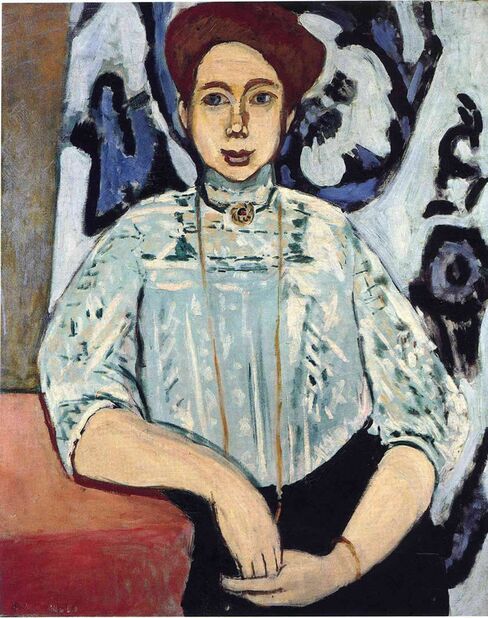
Greta Moll’s Heirs Say Stolen Portrait Is at London Museum
Lawsuit says U.K’s National Gallery should have known better
Painting entrusted to student then illegally sold, family says
l
More than a century after she sat for a portrait by Henri Matisse, Greta Moll is still an object of desire.
Portrait of Greta Moll by Henri Matisse.
Source: Rowland & Petroff
The
National Gallery in London was sued in the U.S. by three of her
grandchildren who claim the museum wrongfully acquired the 1908
portrait, decades after the work by the famed French artist was
allegedly stolen in the wake of World War II.
Moll, who had been a
student of Matisse’s, died in 1977 without ever knowing what became of
the painting. Two years after her death, the museum bought the work from
a London gallery for an undisclosed sum. The grandchildren sued for $30
million.
The National
Gallery ignored the red flag that the work had been transferred to a
gallery in New York immediately after the war, according to the suit
filed Wednesday in Manhattan federal court. The museum, aware of the
legacy of stolen art from the war, never asked Moll’s family members in
U.K. how she’d lost the painting, they said.
"In many such cases
where war-related looting and other losses occurred, the possessors of
such property eventually did the right thing and returned the lost
artworks," Oliver Williams, Margarete Green and Iris Filmer, who are
cousins, said in the complaint in federal court in Manhattan. "The
National Gallery has ignored the international legal standard."
The National Gallery’s press office said it had received the complaint and declined to comment.
Paintings
and other artworks by European masters have been at the center of
numerous international legal disputes, usually over claims they were
stolen by Nazis from wealthy Jews who were robbed of their possessions
or murdered in the Holocaust. The cases have often pitted aggrieved
descendants against famous dealers and art institutions that may have
inadvertently come into possession of stolen works.
Matisse Students
Moll
sat for Matisse while she and her husband Oskar were his students in
Paris, according to the suit. Oskar Moll bought the painting from
Matisse before he and Greta moved back to Germany to teach and sculpt,
the family members say. The work, known simply as "Portrait of Greta Moll," came to be regarded as a masterpiece of Matisse’s fauve period, and it was hung prominently in the Museum of Modern Art in Manhattan in a 1931 Matisse retrospective, according to the suit.
As
the Nazis rose to power, the Molls came to be regarded as degenerates
and “Bolshevist," according to the suit. In 1933, Oskar Moll was fired
from his job as a professor at the Dusseldorf Academy of Art, while one
of Greta Moll’s sculptures was included in the 1937 “Degenerate Art”
exhibition in Munich, according to the complaint.
By 1944, as the
war raged, Greta Moll watched her home in Berlin burn to the ground
after an Allied attack. But by then she’d moved the painting and other
valuables to a friend’s house outside the city. Oskar Moll, who nearly
starved to death during the conflict, died in 1947, according to the
suit. Greta Moll, left as the sole owner of the painting, believed it
was still in danger after Germany fell to the Allies and decided to move
it outside the country altogether before she moved to the U.K. to live
with her daughter’s family in Wales, according to the suit.
"In
order to protect the painting from the danger of looting by Allied
troops and in particular from Russian troops who were known to have
looted artworks and other valuables, they decided to have it sent to
Switzerland for deposit with an acquainted art dealer for safekeeping,"
according to the complaint.
Moll entrusted the painting to an art
student who was supposed to secure it in Switzerland, but the student
sold the painting instead and fled to the Middle East, according to the
suit. The work was then sold in 1949 to a gallery in New York, Knoedler
& Co., which is now closed.
The gallery should have been aware that the Molls were the actual
owners because they were listed as such when the painting was hung in
the Museum of Modern Art 18 years earlier, according to the suit.
True Owner
"When
Knoedler acquired the painting it should have inquired into the
circumstances of the transfer of title from Oskar Moll and Greta Moll,
especially since neither of them was the seller," according to the
complaint. "Since Knoedler did not acquire title from Greta Moll, the
true owner of the painting, neither Knoedler nor any of the painting’s
subsequent owners, including the National Gallery, obtained good title."From New
York, the painting was sold by Knoedler to oil baron Lee Blaffer in
Texas, then to a private collection in Switzerland, then to the Lefevre
Gallery in London, according to the suit. The National Gallery bought
the portrait from the Lefevre Gallery in 1979, two years after Greta
Moll died, according to the suit. The Lefevre Gallery closed in 2002.
Williams,
Green and Filmer are the children of the Molls’s two daughters, their
attorney David Rowland said in an interview. He said the cousins were
barred from suing in U.K. due to a 1992 law that forbids the National
Gallery from dispensing any of its objects.
The case may have a
hard time surviving in federal court, said Thomas Kline, of counsel at
Andrews Kurth LLC, who has represented claimants, collectors and museums
in several restitution cases, because the plaintiffs and two out of
three defendants are U.K. citizens.
The only U.S.-based defendant
is a charity known as the American Friends of the National Gallery of
Art, London, according to the complaint.
“The only reason
plaintiffs sued here is to avoid the U.K. law that forbids the museum"
from selling works from their collection, Kline said. “This is a dispute
between all U.K. parties concerning a painting in the U.K. I think a
U.S. court would have discretion to decline jurisdiction.”
No Connection
The
American Friends of the National Gallery of Art never had a connection
with the Matisse painting, said Art Hickok, the group’s administrator.
“We
have no formal economic connection other than we are a charity that
supports them,” he said. At least two directors of American Friends are
also on the board of the National Gallery, according to the websites.
There may be another complication to the case too, Kline said.
“If
something is given to a friend for safekeeping and there is a personal
relationship of trust it’s very difficult to sort out what really
happened 70 years later if there’s no paperwork,” he said.
The
case is Oliver Williams v. The National Gallery of Art, London,
16-cv-06978, U.S. District Court, Southern District of New York
(Manhattan).
Drouot Auction House Trial Ends With Thirty-Eight Jailed For Theft
The trial in Paris involving many of
the porters and auctioneers at the renowned Hotel Drouot auction house
has ended with the jailing of 35 porters and three auctioneers. The
defendants, who transported and stored objects destined for sale by
Drouot, were found guilty of helping themselves to treasures including
diamonds and a painting by Marc Chagall. They were sentenced to up to
three years in jail, with 18 months suspended, and fined 60,000 euros
($67,000). Three auctioneers were also convicted in the scandal that
shook the French art world, with the three receiving suspended sentences
of up to 18 months plus fines of 25,000 euros.
The auction house had been riddled with scandal when valuable
art, antiques and gems worth millions of euros went systematically. This
was the charge on the opening day of a trial back in March, which has
sent shudders down the corrupt spine of a barely regulated industry.
Porters from Paris' most famous auction house are accused of unlawfully
taking 250 tonnes of consigned goods which included a painting by Marc
Chagall and rare Ming dynasty porcelain. The trial continues until April
4.
Forty Porters known as "Col Rouge" (red collars) after their
uniforms and six auctioneers from the Le Drouot are on trial for
charges of gang-related theft, conspiracy to commit a crime or handling
stolen goods. The case against the employees was launched in 2009 after
an anonymous tip alerted investigators to a painting by Gustave Courbet
that disappeared while being transported in 2003. Investigators allege
institutionalised theft by the porters -- known as "Les Savoyards" as
all members of the secretive group came from the Alpine region of
Savoie.
Police Raids have uncovered a treasure trove that went missing
and has exposed the lavish lifestyle of the porters involved. One
according to reports flaunted it by driving a Porsche 911 and the latest
BMW cabriolet, while another purchased a Paris bar with the ill-gained
goods. The porters pilfered items sent to the auction house after house
clearances of wealthy people who had died. Most items were not on the
inventory. Some items were apparently then sold at auction at Le
Drouot.
“La yape" which means "theft" in Savoie slang -- was endemic
and profits were shared among the group. The "Col Rouge", who wear
black uniforms with red collars, have monopolised the transport and
handling of valuables for the Hotel Drouot auction house since 1860.
Membership of the union is tightly controlled and limited to 110. Each
new member was apparently brought into the fold by an existing member,
and according to some testimonies, the initiation process involved
stealing something and sharing the proceeds with fellow insiders.
THIRTY WORKS OF ART RECOVERED IN TORREVIEJA
Alicante’s Civil Guard in Alicante has arrested a Spanish man aged
51, as it continues to investigate two others, a 37 year old woman of
Brazilian nationality and another Spanish National on suspicion of
several counts of theft, aiding and abetting, the illegal possession of
weapons, crimes against cultural, historical and artistic heritage and
fraud.
Investigation first began after the allegation of the theft of nearly
400 bee hives on farms located in different municipalities of the Vega
Baja. The thefts occurred in the towns of Formentera de Segura, San
Isidro and Guardamar del Segura over the last 18 months. It would appear
that the group were both selling the hives and claiming that they had
been stolen, thus also profiting from fraudulent insurance claims to a
value of approximately 21,000 euros.
However, during the investigation, there were a number of additional
offences that surfaced suggesting that they were involved in other shady
deals.
It appeared that one of the trio, from Almeria, was a builder. He
also ran an antique shop, which could be used as a cover for the sale of
stolen goods.
Agents discovered that he was offering various pieces of art at
knockdown prices for between 3,000 and 18,000 euros. Among the items for
sale was a well known wooden carving of the Immaculate Virgin, dated
between the seventeenth and eighteenth centuries, originating from la
escuela Granadina de Alonso Cano
The man was also involved in the robbery of a house in a town of
Almería, which took place in 2006, from which several firearms had been
stolen, so the agents suspected he could be armed and dangerous.
On obtaining a warrant and searching the house of one of the accused,
in addition to 171 beehives and 45 honeycombs, officers found about
thirty priceless objects of art, among them paintings by Cecilio Plá,
Chinese historical vases, elephant tusks measuring nearly two meters, a
metre high bronze horse, an extensive collection of coins and a sword
carved from bone.
Many have since been moved to the Department of Culture of the
Provincial Council of Alicante where they are being examined to
determine their value.
A further house search in the Orihuela village of Mudamiento
uncovered further weapons including a Benelli rifle, a KRICO carbine, a
Franchi shotgun and an automatic Walther pistol, all from the 2006
burglary of the house in Almeria.


 A 79-year-old art collector had a number of paintings hanging in his
home near Bay Street and Bloor Street West. Police say he went into
hospital on Oct. 16 and died about a week later.
A 79-year-old art collector had a number of paintings hanging in his
home near Bay Street and Bloor Street West. Police say he went into
hospital on Oct. 16 and died about a week later. "I wanted to get this out quickly because I believe the art community
is an honest community," Fenwick told CBC Toronto. "If these things
start turning up for sale, maybe I'll start getting some information."
"I wanted to get this out quickly because I believe the art community
is an honest community," Fenwick told CBC Toronto. "If these things
start turning up for sale, maybe I'll start getting some information." Fenwick says there were no signs of forced entry, so he thinks the suspect was known to the victim.